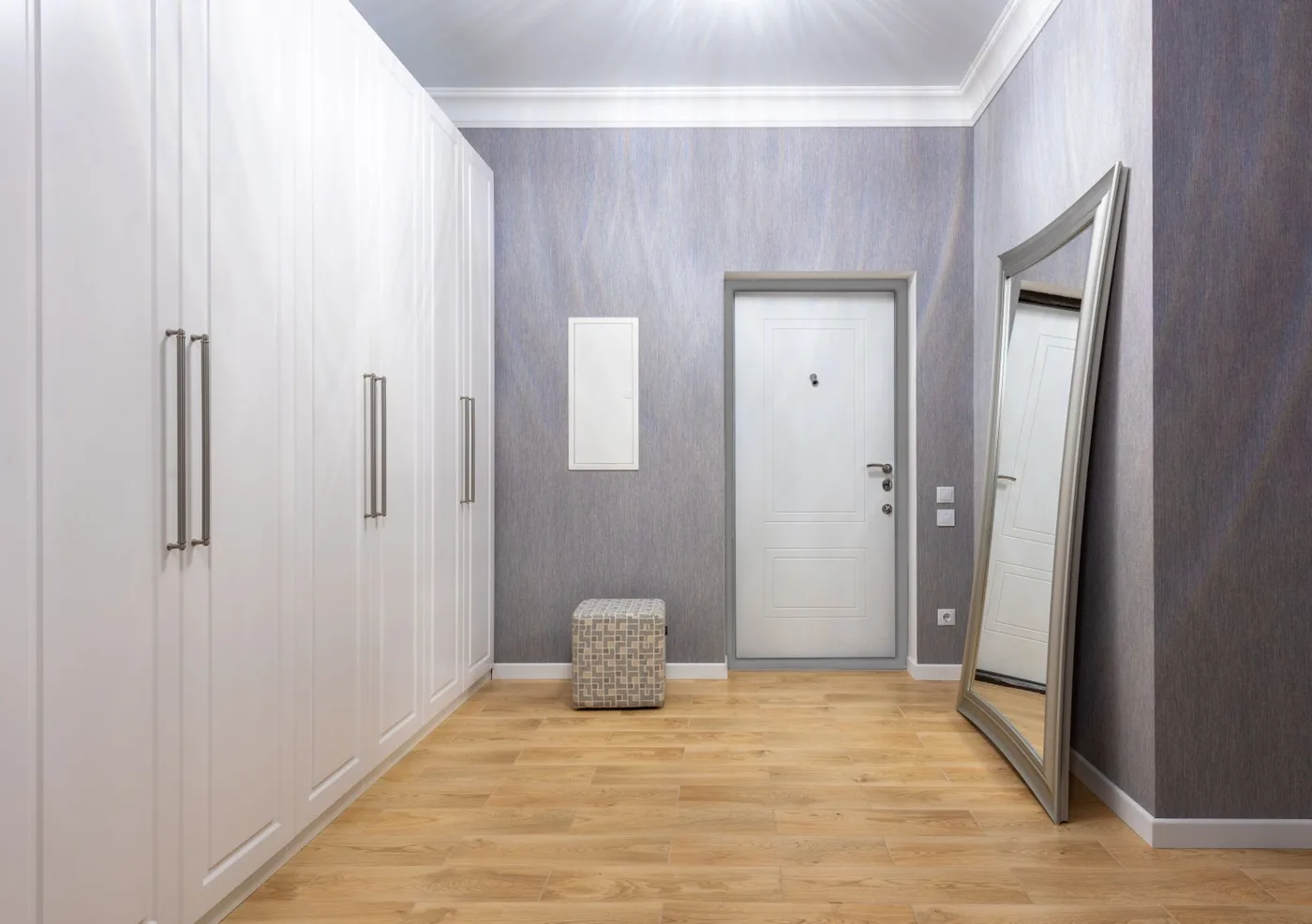
A hall closet usually serves several different routines at once: arriving home, leaving in a hurry, putting away cleaning supplies and finding something for bad weather. Organizing it by appearance alone can leave everyday items trapped behind occasional ones. Begin with a short observation of what the household actually reaches for during an ordinary week.
Give the busiest items the easiest positions
Empty one section at a time so the hallway remains passable. Group coats, shoes, bags and accessories, and remove items that belong elsewhere. Check the closet for dampness or damaged shelving before returning anything. A crowded storage plan should not hide a leak, block access to equipment or overload an existing rail.
Place current everyday coats and bags at a height their users can comfortably reach. Give children an appropriate reachable space without creating a climbing invitation. Keep heavy objects low and use upper shelves for light, occasional items within the shelf's load capacity. If a rail or shelf needs replacement, use a fixing arrangement suitable for the wall and expected load rather than treating extra hooks as unlimited storage.
Separate wet arrivals from dry storage
Decide where raincoats, umbrellas and muddy footwear can dry before being enclosed. Use a floor-protection method suitable for the surface and empty collected water promptly. A tray needs cleaning too; it should not become a permanent damp patch beneath a pile of shoes. Do not close wet textiles tightly against clean, dry coats.
Small accessories work better in shallow, clearly assigned containers than in one deep miscellaneous basket. Separate gloves from pet-walking equipment and household keys from spare fasteners. Store cleaning products according to their labels, away from children and pets, rather than mixing them with clothing because the closet happens to have an empty shelf.
Test the layout during a real week
Avoid filling every gap immediately. Leave space for an arriving guest's coat or the bag someone carries home. If a family member repeatedly leaves an item outside the closet, examine the route and access before adding a rule. The assigned place may simply be awkward to reach or already full.
After a week, adjust the positions of the most-used items and remove anything that has not earned a place in this busy area. Repeat the review when the season changes. A successful hall closet is not necessarily color-coordinated; it lets people put things away in one easy movement and find them again without unloading the rest of the cupboard.