A kitchen can take longer to clean when each task creates work for the next one. Crumbs fall onto an already mopped floor, a wet dish rack blocks the counter, and yesterday's dishes occupy the sink needed for rinsing. A useful cleaning order follows where the dirt and water will go, rather than which surface first catches your eye.
Make room before reaching for a cleaner
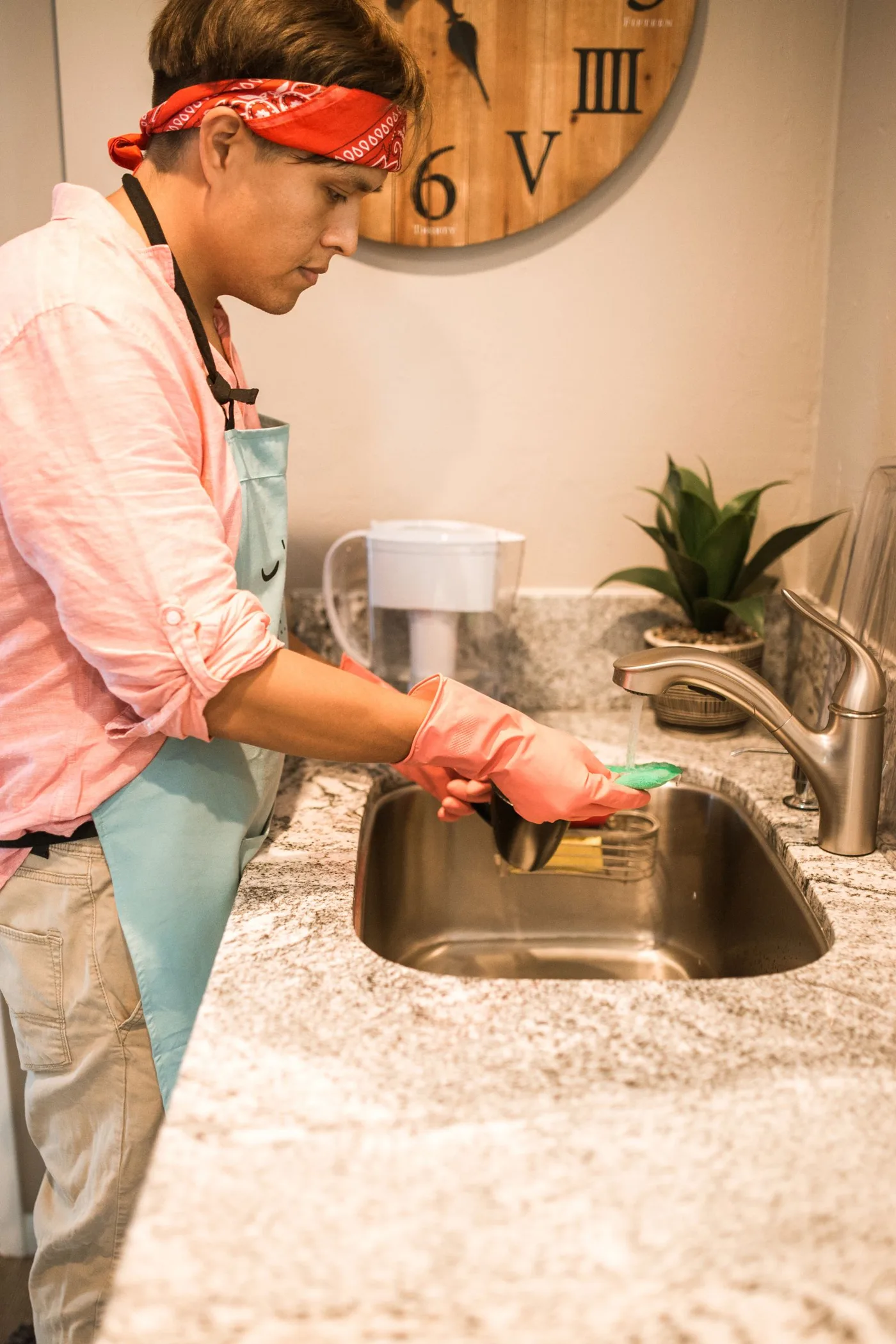
Put away food and return items that belong in another room. Clear enough counter space to handle dishes without balancing them near the edge. Load the dishwasher, or wash the items that are blocking the sink. Leave a small working area for anything that must air-dry. A completely empty kitchen is not necessary; a clear route through the job is.
Collect a few cloths, the cleaner appropriate for each surface, and a bag for loose waste. Read the product directions before starting, including any ventilation, dilution and rinsing requirements. Do not mix cleaning products or add another chemical to a partly used bottle. Keep children and pets out of the working area while products are in use.
Move the dry debris before adding water
Lift loose crumbs from the table, counter and accessible shelf edges with a dry method suitable for the finish. Work from higher surfaces toward lower ones, without sweeping dirt into open drawers or food. If the floor has gritty debris, collect that before walking it around the room. A greasy patch needs a different treatment from a few breadcrumbs, so avoid wetting every surface at once.
For a regular session, concentrate on the surfaces used for preparation and meals. The tops of cabinets, inside the oven and the refrigerator's lower drawers do not all need to become part of the same job. Put a larger task on a separate list if it would leave the kitchen unusable when someone needs to cook.
Clean the working surfaces in a small circuit
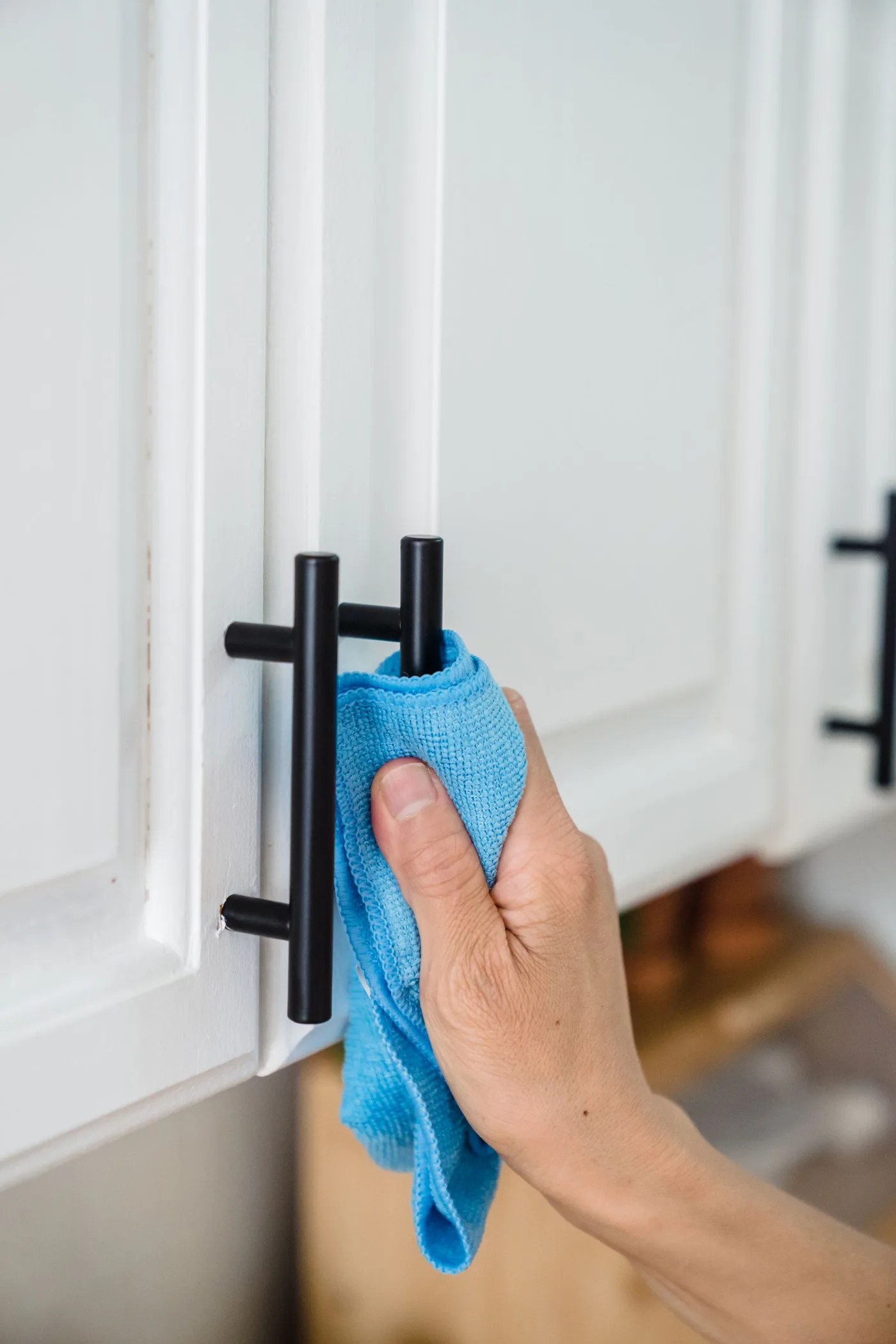
Start at one end of the counter and move around the room. Use the surface manufacturer's care advice, especially for stone, wood, painted cabinets and coated appliance fronts. Apply only the amount of moisture the material can tolerate. Keep a cloth used on the floor or waste bin separate from one used on a food-preparation surface.
Cleaning and disinfecting are not interchangeable tasks. CDC guidance distinguishes removing dirt with cleaning from killing remaining germs with a disinfectant. If disinfection is appropriate, first clean the surface and follow the product label for suitability, contact time and any required food-contact rinse. Do not assume a quick wipe with a wet cloth completes that process.
Leave the sink and floor until the wet work is finished
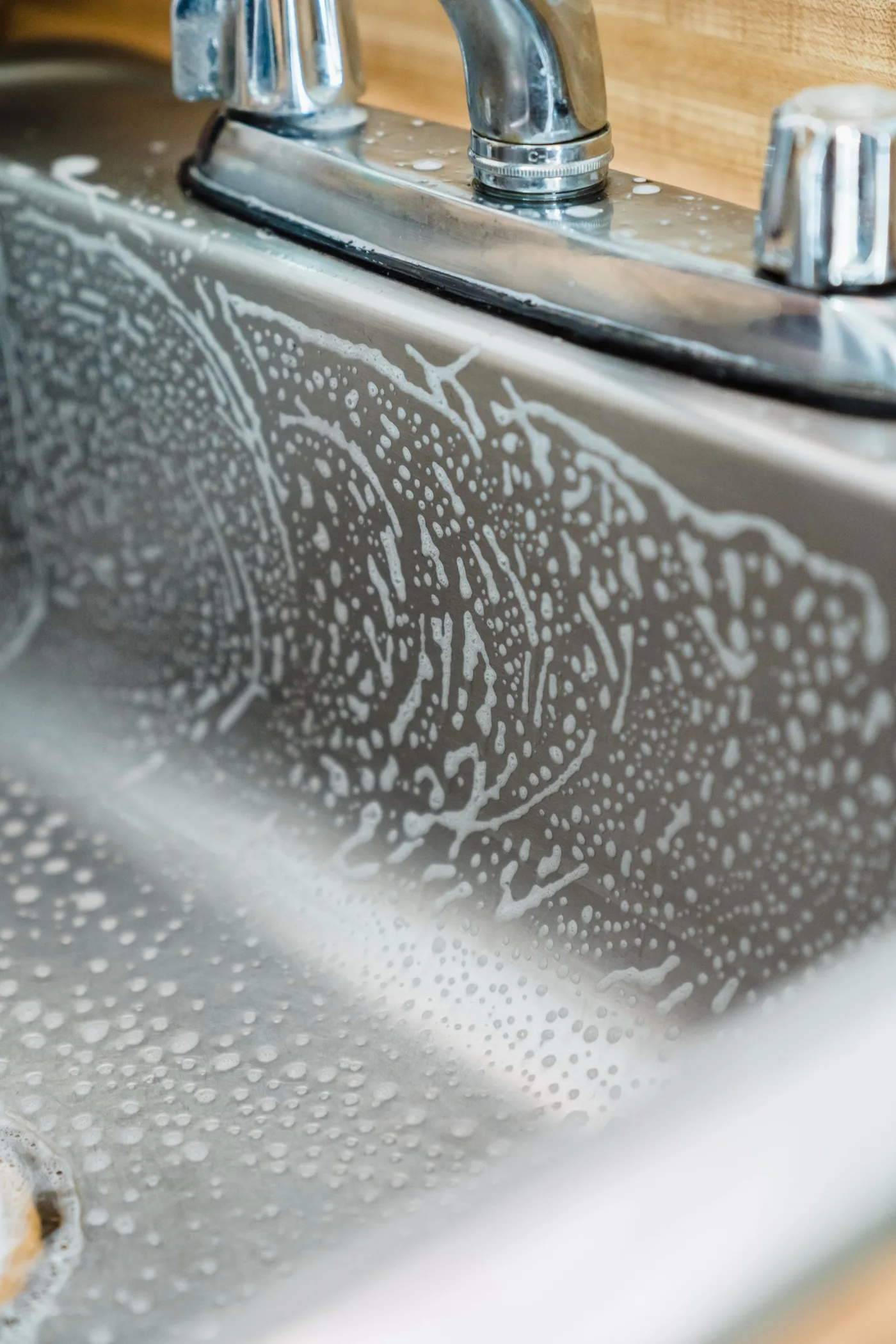
After the counter and appliance fronts, clean the sink according to its finish, remove trapped food from an accessible strainer, and wipe the faucet. Then deal with the floor, beginning at the far side and leaving a dry route out. Use a method that suits the flooring rather than flooding it to make the job feel thorough.
Finish by hanging reusable cloths so they can dry before laundering, putting products away securely, and returning only the items that belong on the counter. The next session becomes easier when the drying area, bin and preparation space are ready to use. If you stop early, leave the kitchen safe and functional instead of leaving cleaner sitting on a surface unattended.