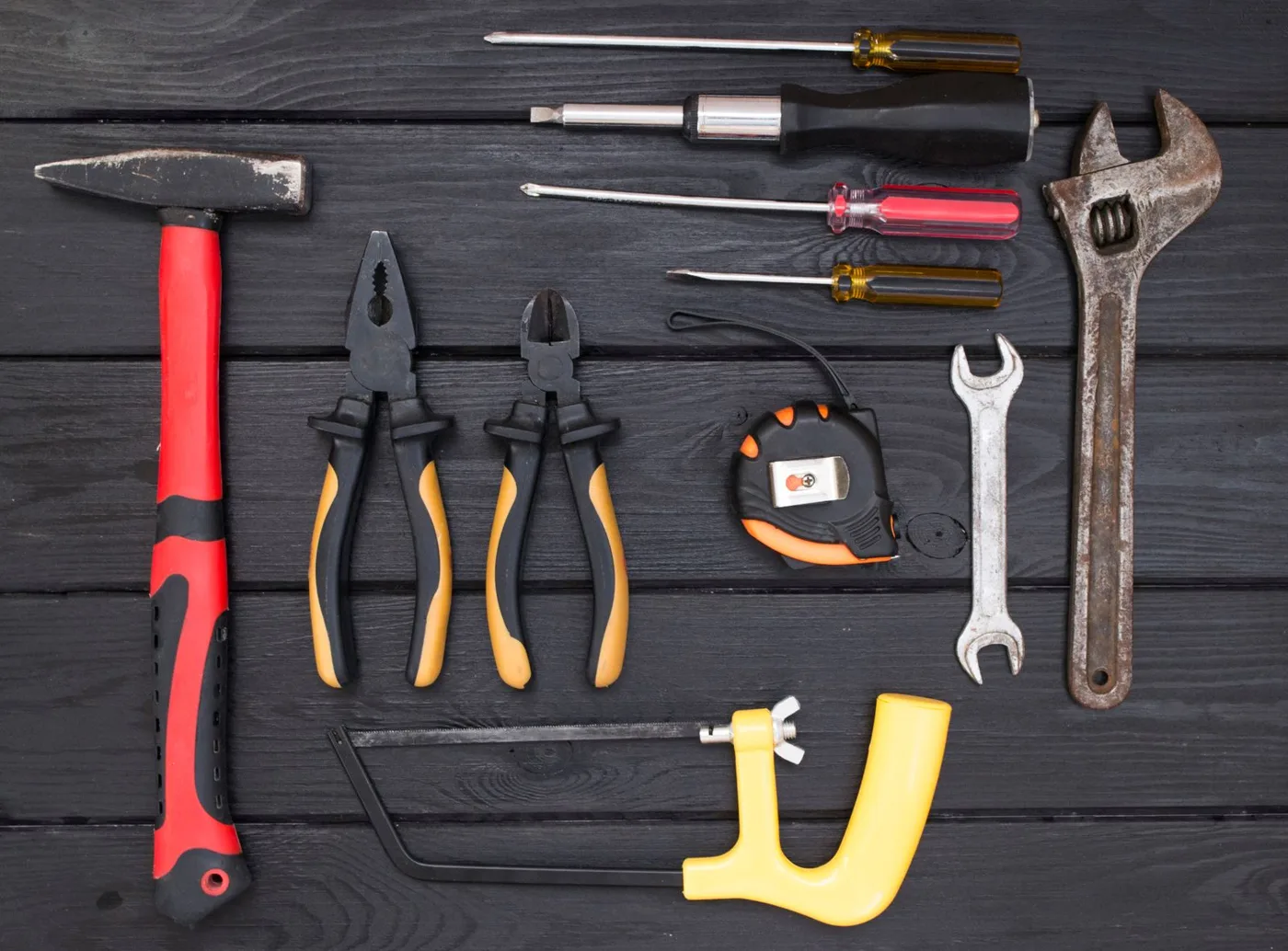
A screwdriver can look close enough to the screw and still be the reason a small repair goes wrong. The useful match is between the working tip and the recess, not between the handle and the size of the job. Before tightening a loose pull or assembling a shelf, spend a moment checking that the tool seats fully without rocking.
Match the recess, then support the work
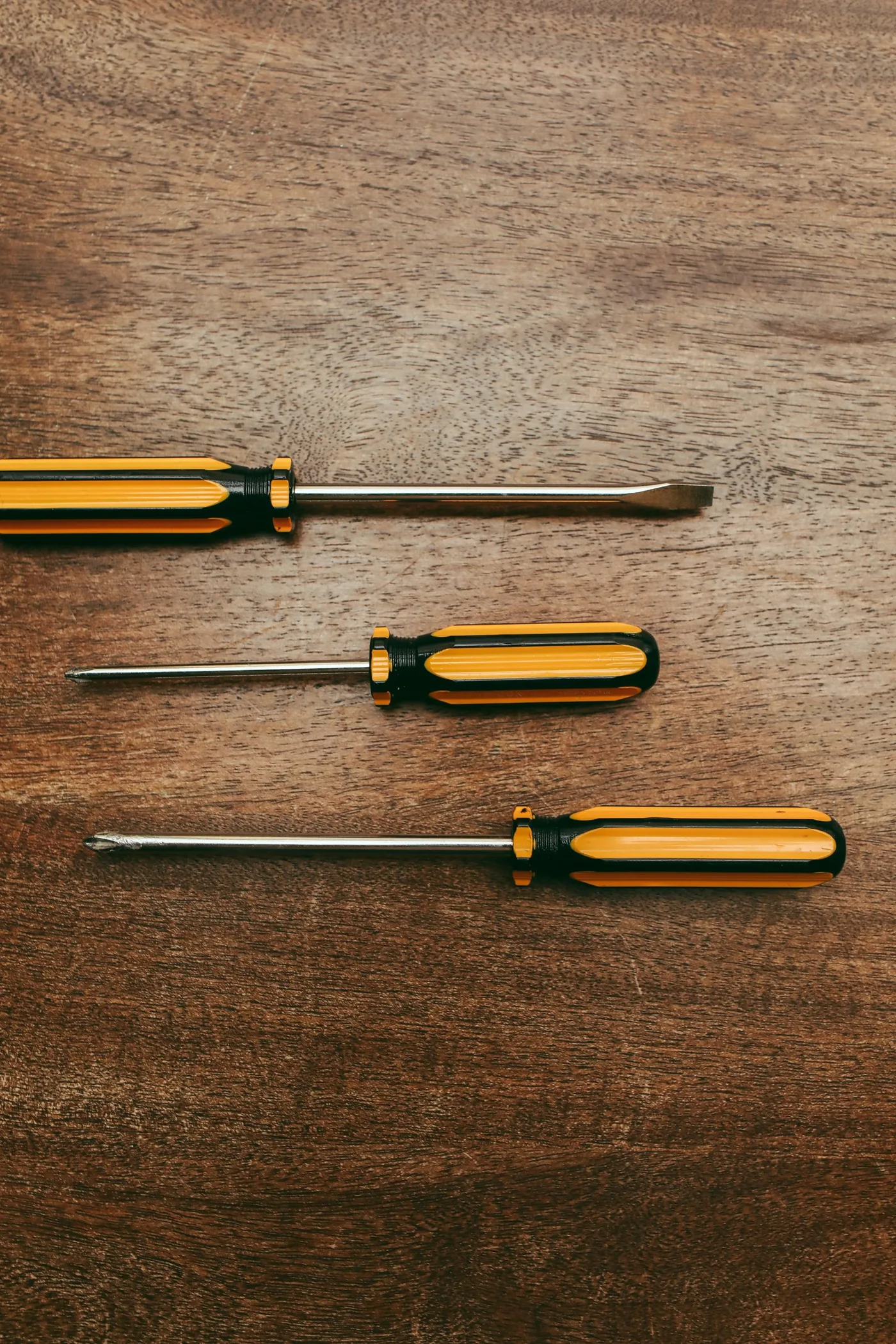
Wipe loose dirt from the screw head so its shape is visible. A straight slot, a cross, a square, a hex socket and a six-lobed recess need different drivers. Even cross-shaped heads are not all interchangeable. Phillips and Pozidriv have different profiles; forcing one into the other can damage the recess before the screw moves.
Try the identified tip by hand, with the screw stationary. It should engage the recess positively rather than touch only the upper edges. A slotted blade should fit the slot width and thickness without projecting far enough to scrape the surrounding finish. If the size marking is missing, compare known sizes rather than committing to the first one that enters.
Arrange the work so the driver can stay in line with the screw. For a cabinet pull, open the door and support the pull from the front while turning from behind. For a small loose component, use appropriate workholding on a stable surface. Do not hold the component in your palm directly behind the screw, where a slipping tip could land.
A hand screwdriver gives useful feedback on light household fittings. Apply steady pressure into the recess and turn slowly. Stop if the tool repeatedly climbs out, the head starts deforming, or the surrounding material compresses. Those are reasons to reassess the fit or the fastening, not to increase speed.
When a better tip will not solve it
A worn screw, damaged threads or a swollen joint may resist even the correct driver. Compare the head with an undamaged example if one is available. Replacement screws need the original thread, length and head style; a longer screw is not automatically a stronger repair and may emerge through the opposite face.
Keep commonly used drivers or bits in labeled spaces so their profiles remain identifiable. Replace chipped tips and tools with loose handles. Clean off oil before use, and put the tool away after the fastening is secure. This guidance covers ordinary non-electrical household fittings; a plastic handle is not permission to work on electrical equipment.