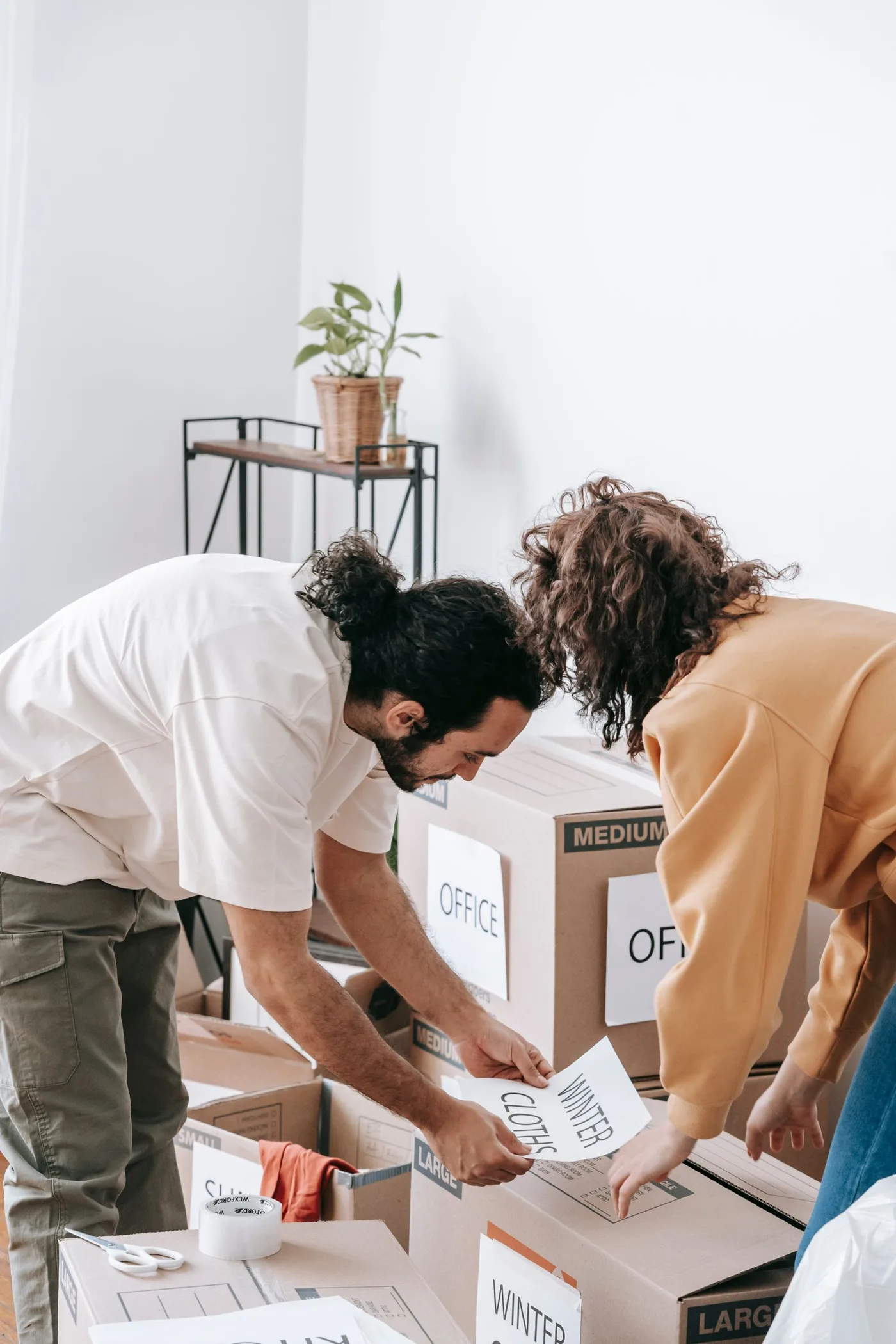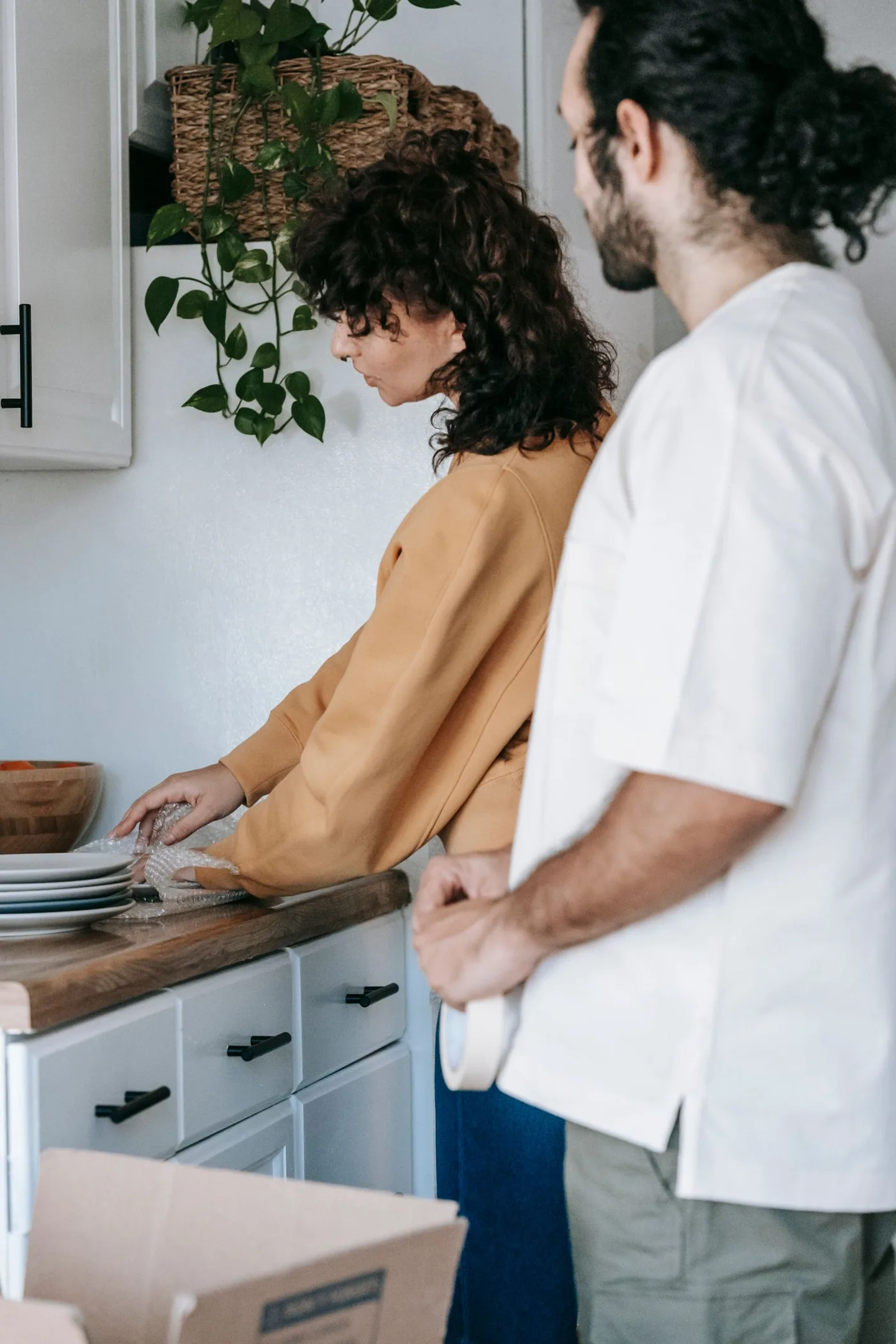
Packing a kitchen too early can leave you buying meals because the pan, spoon or bowl you need is already at the bottom of a box. Packing it too late leaves fragile objects competing with the last-minute cleanup. A staged approach separates occasional equipment from the small working kitchen you need until departure.
Keep a short-use set outside the packing zone
Choose the items needed for your remaining meals: a few dishes, basic utensils, a pan or other cooking equipment you actually use, and the supplies needed to wash them. Put them together in one cabinet or a clearly marked tray. Avoid keeping every favorite mug available simply because choosing feels difficult; a smaller set makes the final cleanup predictable.
Plan food separately from equipment. Check what the mover will accept and what needs temperature control during transport. Do not place leaking bottles, opened food or cleaning products among clean cookware. Some possessions need a different transport plan, and it is easier to arrange that before the rest of the kitchen disappears into cartons.
Pack by fragility and shape
Start with serving dishes, occasional baking equipment and appliances you can do without. Check appliance instructions for removable parts and transport arrangements. Bag loose accessories together, identify the appliance they belong to, and protect sharp components appropriately. A lid that fits several similar containers is easy to lose unless the matching parts are kept clear.
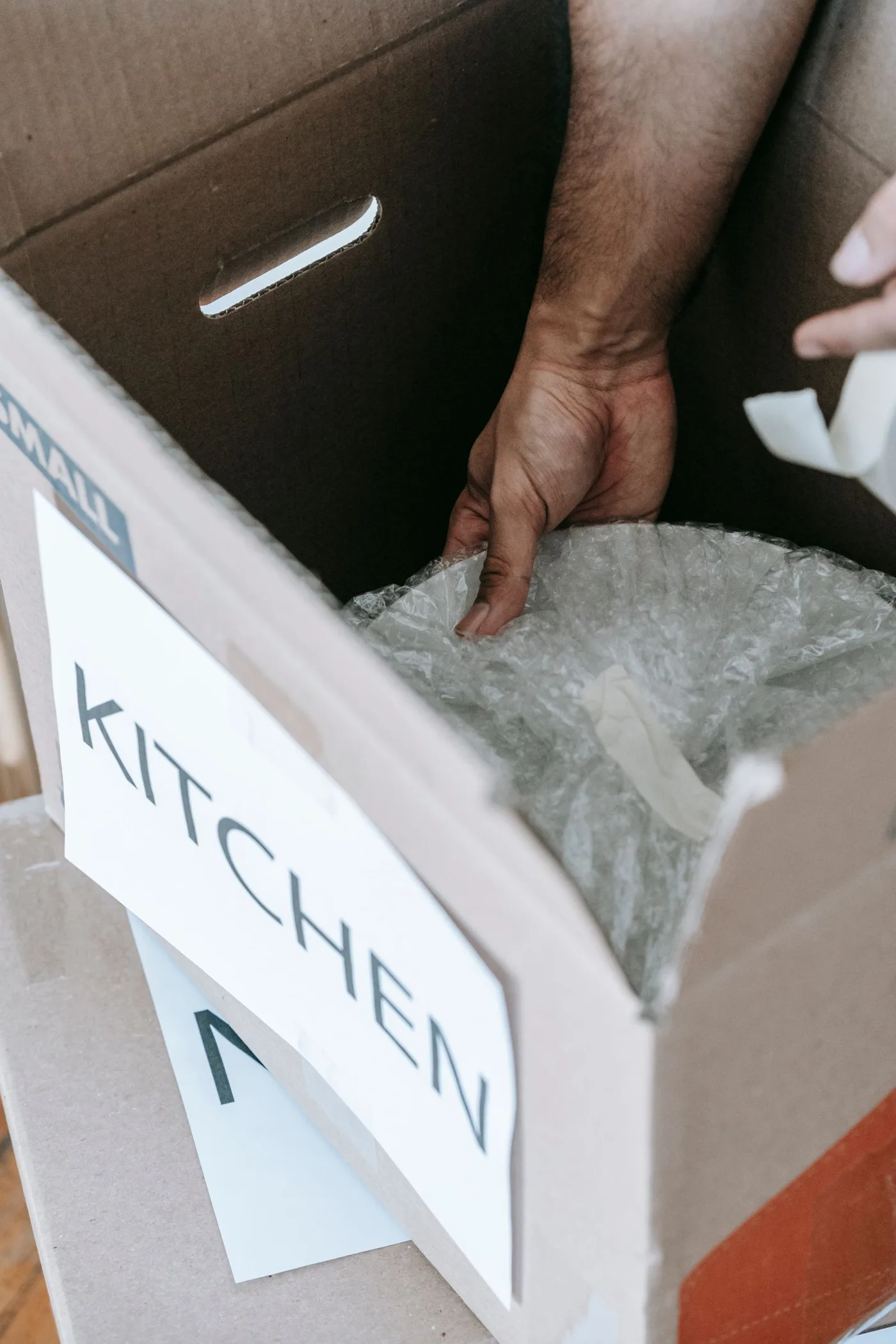
Use cushioning suited to the object instead of treating a kitchen towel as automatic protection for every fragile item. Separate items that can scratch one another, protect edges and handles, and do not force a tall object into a box that cannot close properly. If a piece is valuable or unusually delicate, ask the moving provider about specialist packing rather than experimenting on departure day.
Make the last box useful at both ends
The final kitchen container can hold the clean, dry short-use set once the last meal is finished. Label it for early access and keep a simple note of what it contains. Include ordinary items that make the first meal possible, but transport any blades or breakables in their own properly protected compartments. Do not create one mixed box that is dangerous to rummage through.
Before closing the kitchen, check the dishwasher, oven storage drawer and high cupboards, not just the obvious shelves. At the new home, inspect the storage area before unpacking food-contact items. Unpack the short-use set first, wash anything that needs it, and delay the rest until you know where it will be used. This keeps unpacking from becoming a rushed attempt to fill every cupboard immediately.