A sofa that fits a room can still fail to reach it. The route includes door openings, hall corners, stairs, landings and the space needed to turn the object, not just the final floor area. Measure that route before moving day so a difficult piece does not become an improvised lifting problem in a crowded entrance.
Record the piece in its transport condition
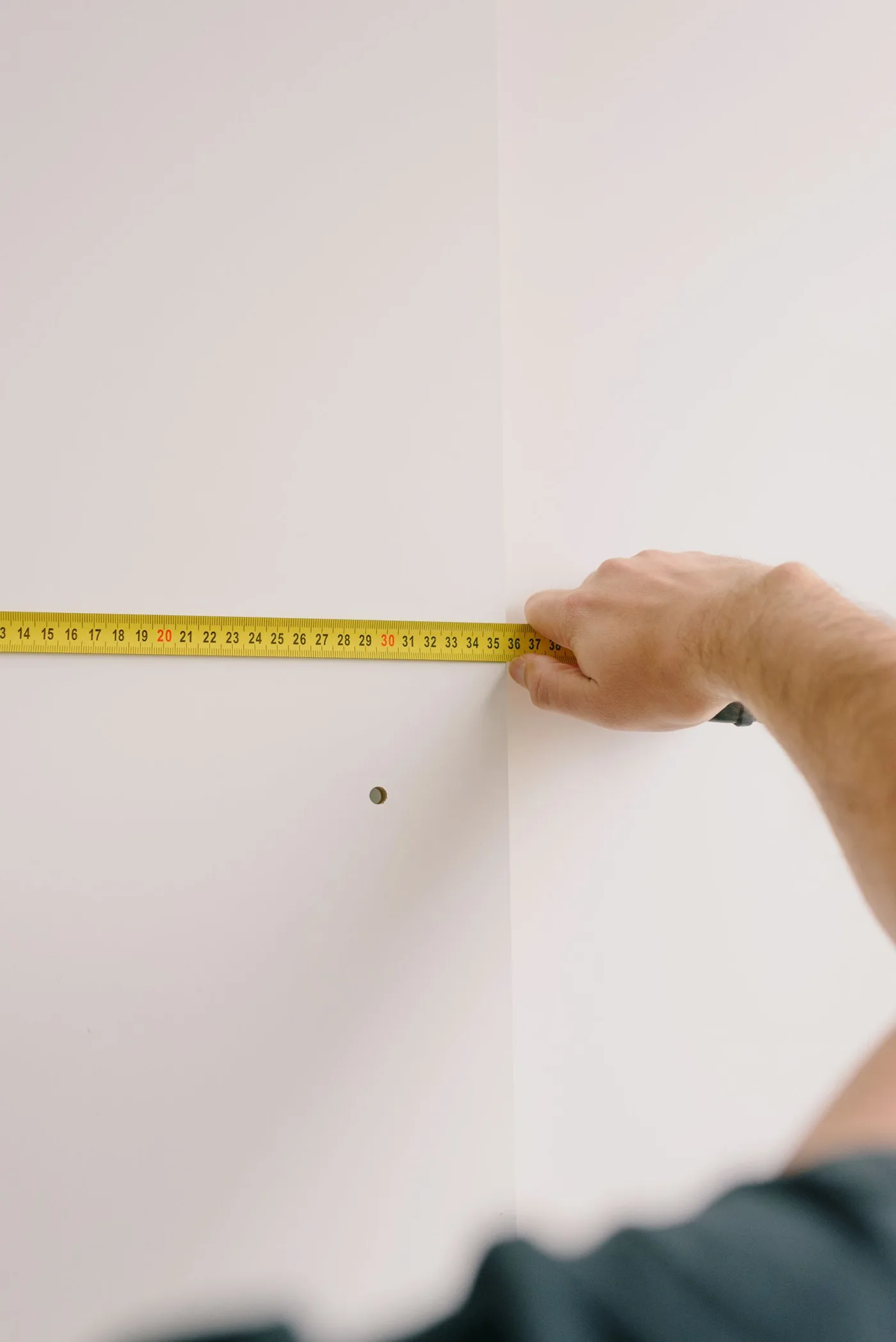
Measure the item's overall length, width and height, including parts that project. Check the manufacturer's instructions to see whether legs, handles or other pieces are designed to be removed. Do not assume an upholstered arm, glued joint or built-in mechanism can be taken apart because doing so would make the measurement easier.
Make a note of any removable parts and the tools required, and keep the instructions available. If the furniture will be handled by movers, provide the measurements and photographs before the visit. Include details about unusual weight, fragile surfaces or moving mechanisms rather than expecting a crew to discover those conditions while carrying it.
Follow the actual path through the building
Measure the clear opening with the door in the position it can safely reach, taking account of handles, closers and other projections. Look at the space immediately before and after the opening. A generous doorway may still lead into a narrow corridor where the furniture cannot turn. Include changes in floor level and anything fixed overhead or beside the route.
Check building access rules, elevator dimensions and any reservation arrangements if relevant. Do not prop open fire doors or remove building fixtures to solve a measurement problem. Ask the building manager and the moving provider about an approved plan. Clear loose rugs, boxes and other avoidable obstacles once the route is confirmed, while keeping required safety access available.
Do not reduce a three-dimensional move to one diagonal
One favorable diagonal measurement is not proof that a rigid object will fit around a corner. Shape, turning space and handling positions all matter. If the fit is close, ask an experienced mover to assess it before committing to transport. Avoid forcing the piece, bending a frame or trying to support it from decorative parts.
Use the measurements to make decisions early: disassemble only as designed, choose an alternative location or arrange suitable professional help. Protecting corners and flooring is part of the plan, but padding also changes the effective size slightly. A clear, agreed route saves more trouble than discovering at the door that a carefully wrapped piece needs to be unwrapped, altered or sent back.