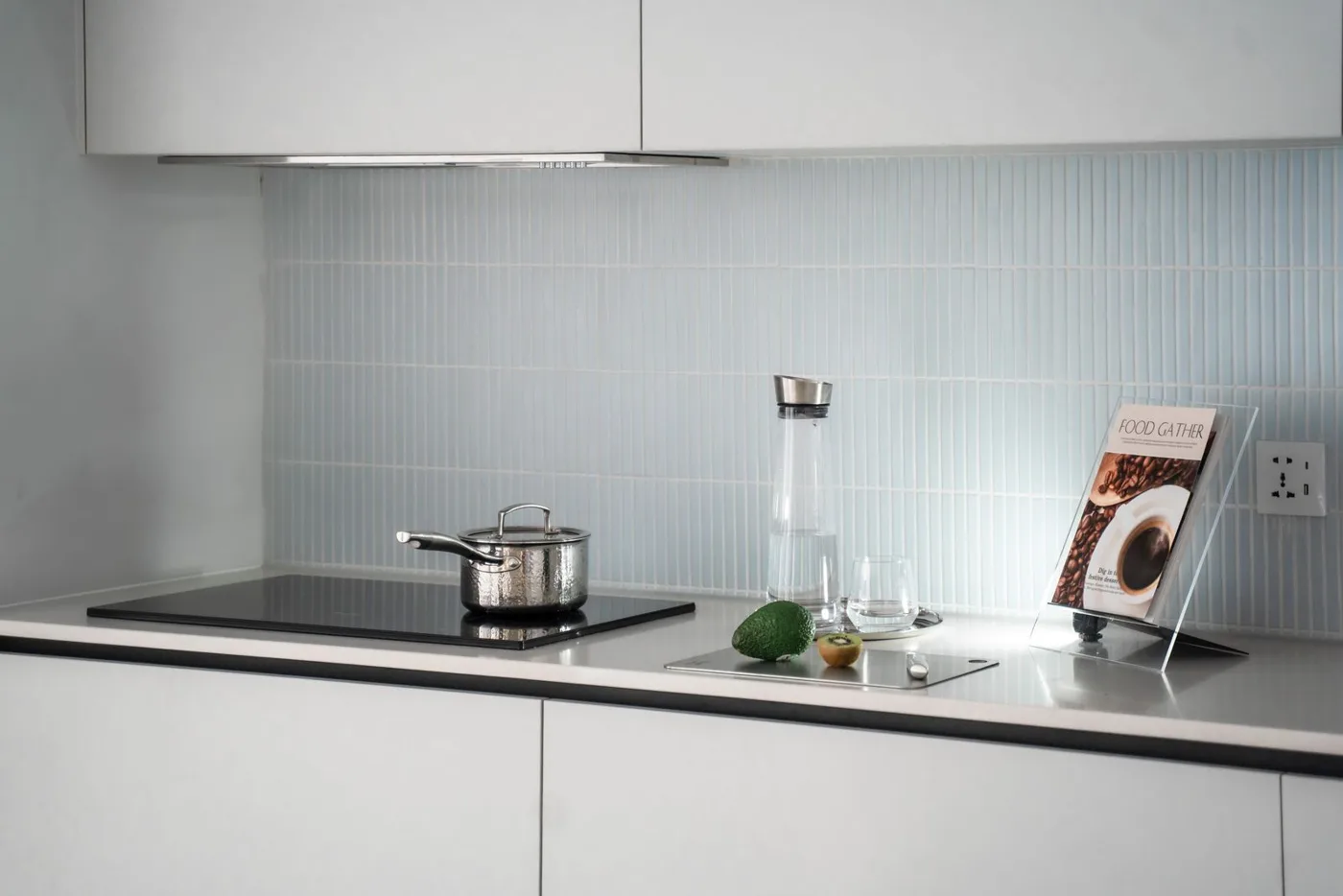
Grease on cabinet doors is usually most noticeable near handles and beside the cooking area. Cleaning the entire kitchen with a strong degreaser can turn a small sticky patch into a finish problem. The useful distinction is between removable cooking residue and a coating that has softened, worn or begun to peel.
Identify what covers the door
A painted door, wood veneer and a foil-wrapped panel may look similar from a distance but do not have identical cleaning instructions. Check the cabinet paperwork or maker's website before selecting a product. Pay attention to edges: lifting film, exposed fiberboard or an open joint is a reason to minimize moisture and arrange repair advice.
Take a photograph of a worn handle area before cleaning. It provides a comparison when the surface dries and helps prevent chasing an existing color difference with increasingly abrasive tools. Remove only the objects that block your reach; emptying every cabinet adds work without improving the door-cleaning result.
Work on one door at a time
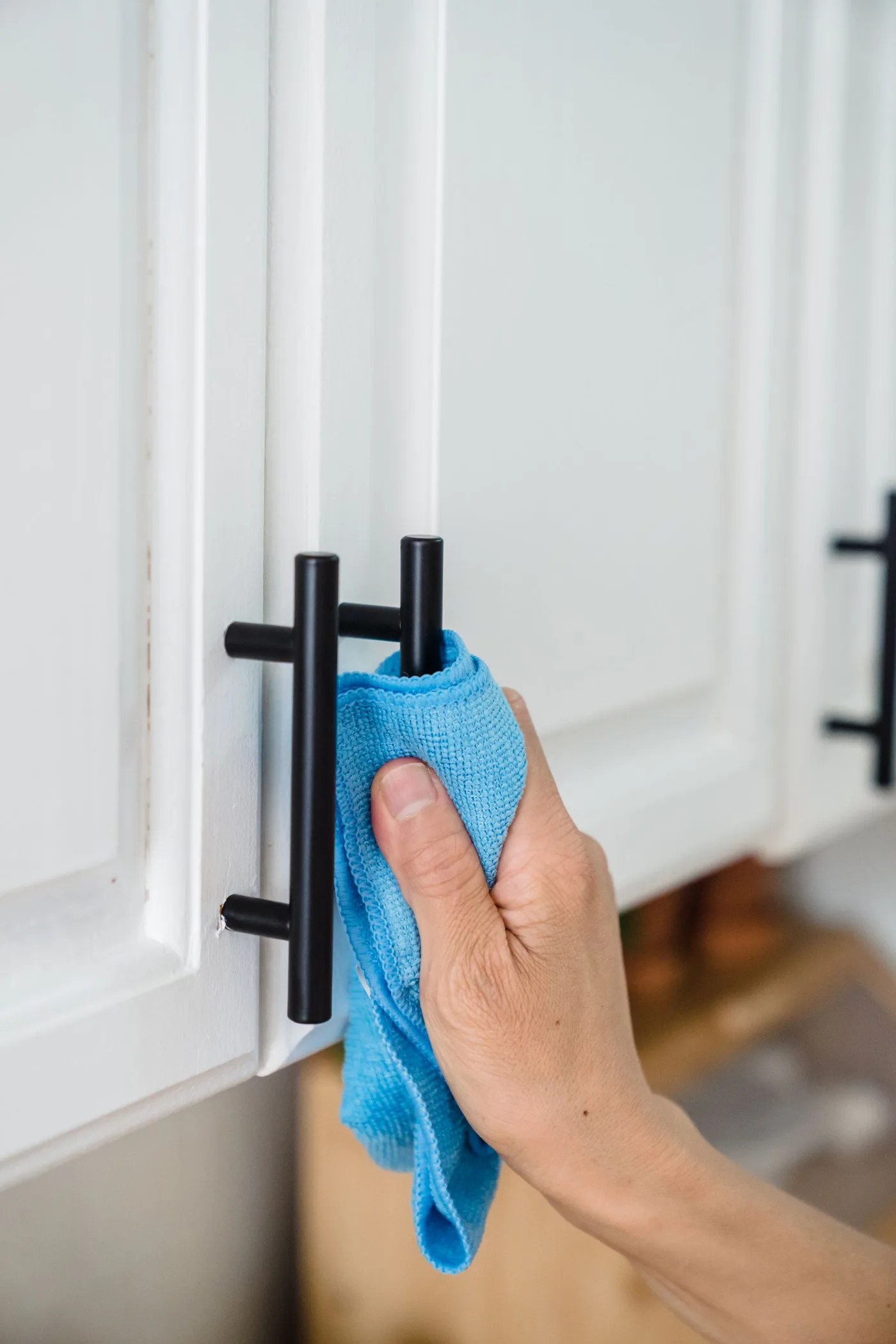
Remove dry dust first with a soft cloth. Apply a cabinet-compatible cleaning solution to a cloth as directed, rather than flooding the panel with spray. Merillat's wood-care guidance favors gentle cleaning and drying, not steel wool or soap pads. Test an unobtrusive area and allow it to dry before continuing.
Support the door lightly while wiping around the handle. Do not use the hinge as resistance for a forceful scrub. Fold the cloth so a clean face reaches the narrow area behind the pull; a cloth already loaded with grease simply redistributes it across the door.
Give corners and lower edges a separate pass. These places collect drips from the main panel, especially around recessed moldings. Remove remaining cleaner using the method its label specifies, then dry the door, its edges and the handle. Avoid leaving a wet line on the countertop below.
Know when cleaning has reached its limit
If the surface stays tacky after a careful clean and full drying, the problem may involve an old finish or previous polish rather than fresh grease. Stop adding products. Ask the cabinet supplier which treatment is appropriate, showing the photograph and naming what you have already used.
Keep abrasive pads, concentrated oven cleaners and unapproved solvents out of this job. A small improvement achieved slowly is preferable to a bright patch where the coating has been rubbed away. Do not polish all cabinet finishes automatically; laminate, matte paint and wood may require different care.
After cooking, look at the doors closest to the range when they have cooled. Removing a new splash with the approved method is easier to fit into a routine than allowing several layers to accumulate. Check the range hood filter too if grease returns unusually quickly.