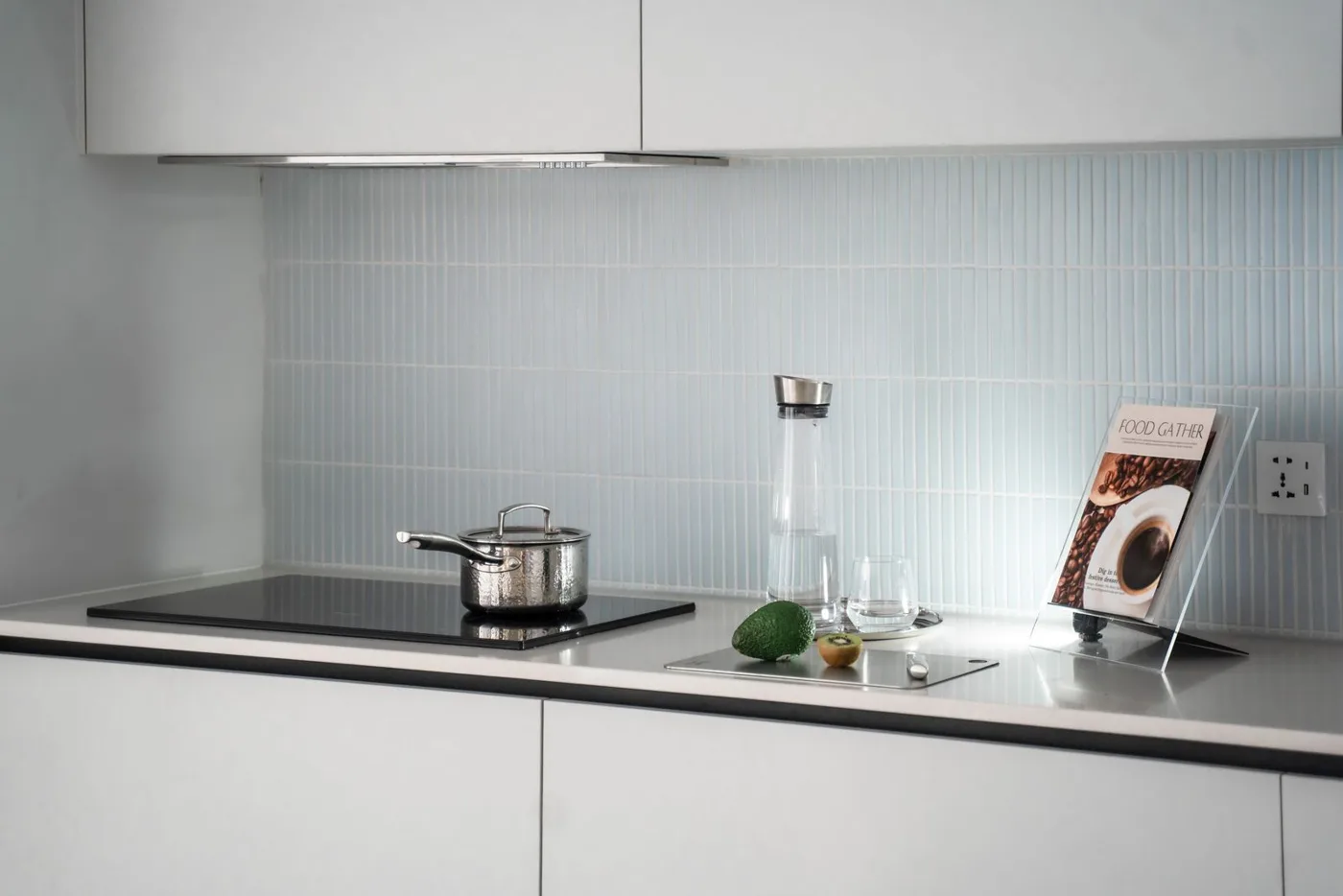
A glass cooktop is easiest to assess with the controls off and the surface cool. The dark reflection reveals residue, but it also makes tiny marks look dramatic. This routine is for ordinary cooled cooking spills; melted plastic, sugary spills or a cracked surface need the appliance's specific instructions, not an improvised version of the same cleanup.
Make a clear working area
Remove cookware once it can be handled safely and check that nobody is about to switch a burner on. A residual-heat indicator is useful, but follow the manual's cooling guidance rather than touching the glass to test it. Keep the cleaning bottle away from surrounding food and utensils.
Gather a clean soft cloth, the approved cooktop cleaner and any manufacturer-specified cleaning pad. A sponge used on a gritty sink is a poor choice here. Brush away loose crumbs gently before applying cleaner so they are not carried underneath the cloth.
Use the product for the surface you own
Glass ceramic, induction controls and decorative trim may each have different restrictions. Some modern surfaces also have special coatings. Read the exact model's care section and use the recommended amount; a thick layer of product can leave more residue to remove without improving the result.
Work across one cooking zone, then the space around it. Let the label determine application and removal rather than inventing a long soaking time. Keep excess liquid away from control openings and edges. Whirlpool's cooktop guidance recommends nonabrasive cooktop products for compatible glass surfaces.
A scraper is not an interchangeable kitchen utensil. Use one only if the manual permits it, with the specified blade and method. Do not substitute a knife, damaged blade or abrasive metal pad. If an ordinary spill will not release with the approved routine, ask the manufacturer before applying more force.
Separate residue from damage
Remove the cleaner thoroughly and buff with a clean dry cloth. View the surface from another angle. A haze that moves with wiping may be leftover product; a scratch or pit will not disappear because it receives another dose. Stop using the appliance if glass is cracked and arrange service.
Check cookware bottoms before returning pans. Dried food or grit beneath a pan can be dragged over the surface during the next meal. Lift cookware when repositioning it rather than using the cooktop as a sliding worktop.
Keep the correct cleaner and pad together so a rushed cleanup does not lead to the wrong product. A short clean after the surface has cooled is generally easier to manage than repeatedly cooking over yesterday's residue. For unusual spills, keep the manual accessible and follow its special procedure promptly and safely.