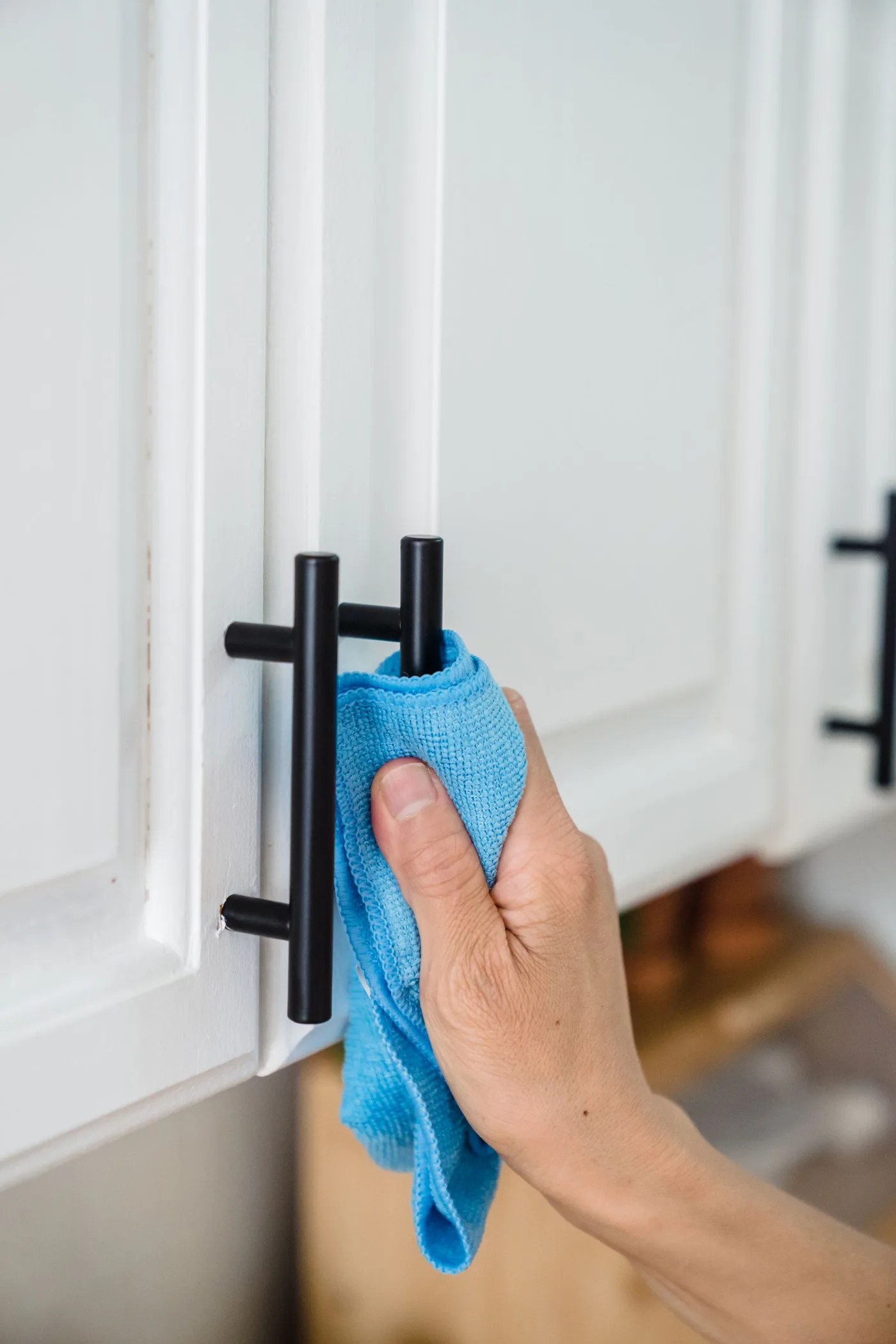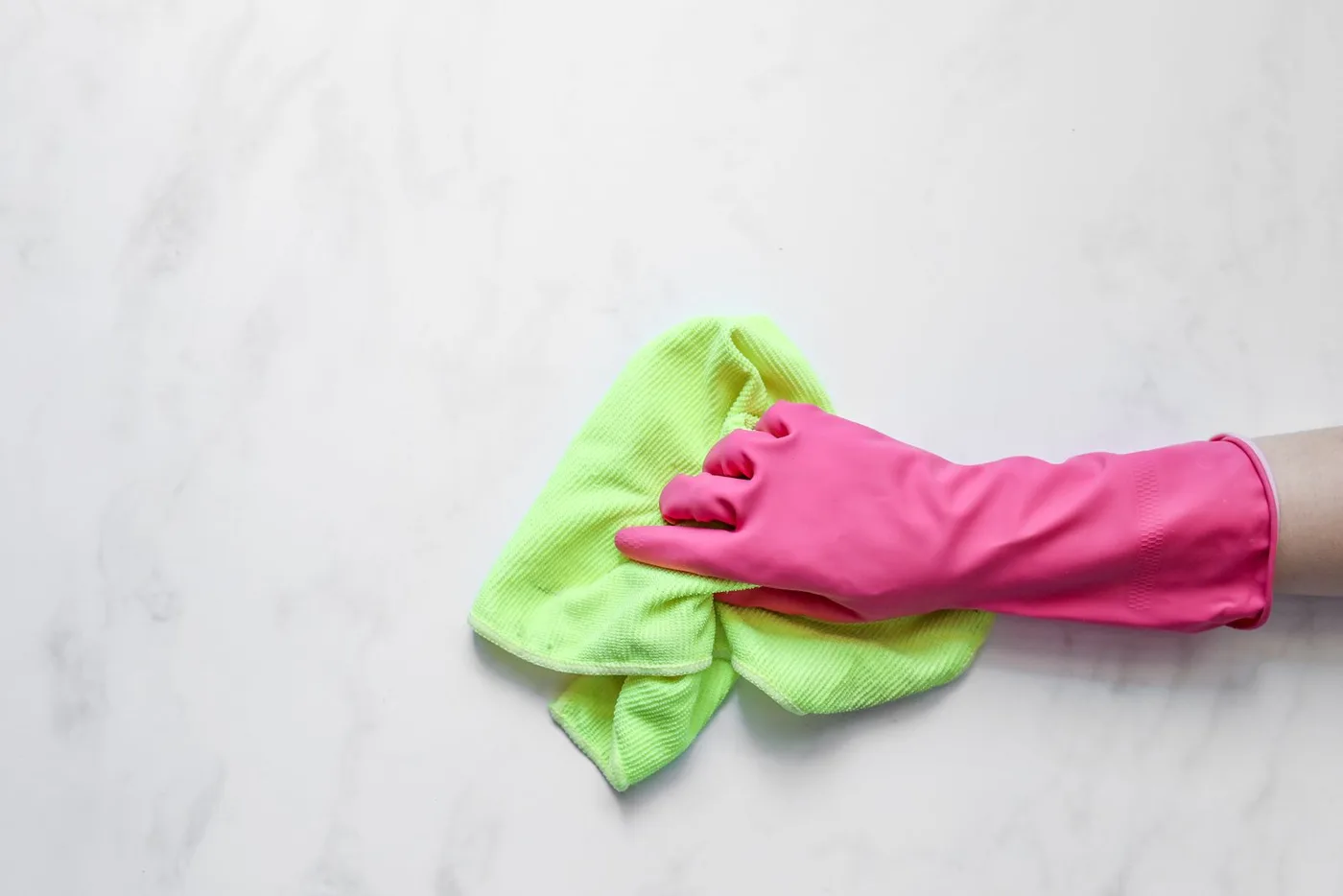
Reusable cloths work best when their jobs remain clear from use through washing and storage. A cloth used around the toilet should not return to a kitchen counter because it looks dry. Organizing by task also helps protect polishing cloths from grease, grit and lint that make them perform poorly.
Assign roles that are easy to remember
Choose a small number of categories, such as kitchen surfaces, bathroom fixtures, toilet-area cleaning and dry dusting. Use colors, labeled containers or another system everyone in the household understands. The system needs to be visible where cloths are stored, not only in one person's memory.
Keep a separate supply for final glass polishing if those cloths need lint-free handling. Avoid borrowing a cloth from a more heavily soiled task because it is the nearest one. Having a few spares makes that decision easier during an interrupted clean.
Read the textile instructions
Cotton, microfiber and specialty polishing cloths can have different washing and drying limits. E-Cloth, for example, publishes product-specific care instructions and restrictions on fabric softener. Do not apply the hottest setting available to every material or assume that more detergent improves a microfiber cloth.
Remove loose debris appropriately before laundering. A cloth contaminated with paint, oil, solvents or another hazardous substance needs the product's disposal or cleaning instructions, not the normal household wash. Do not put incompatible chemical residues together in a bucket.
For normal cleaning cloths, use the permitted detergent dose and cycle, and separate loads where the task or care label requires it. Keep heavily soiled cloths away from items they could stain or load with grit. A mesh bag can help collect small pieces only if it does not prevent adequate washing.
Dry, inspect and return to the right place
Dry cloths fully using their permitted method before stacking them. A cupboard of folded damp cloths is not a useful ready-to-clean supply. If a cloth still feels greasy, carries grit or has an unexplained odor, do not send it straight back to a sensitive surface.
Inspect hems and texture. A hardened patch or embedded particle can scratch even when the surrounding fabric is soft. Retire damaged pieces from delicate tasks, and label any downgraded cloth clearly so it does not drift back into the polishing stack.
Store clean cloths separately from those waiting to be washed. A small ventilated collection arrangement for used damp cloths is better than a sealed wet pile, provided it remains inaccessible to children and pets and does not mix chemical residues.
Review the system after a week of use. If people cannot tell which cloth belongs where, simplify the categories rather than adding more colors. The objective is reliable separation and properly cared-for tools, not a complicated laundry chart.