A carpet spill becomes harder to assess when several products are applied before the first liquid has been lifted. The first response should contain the spill and preserve information about what caused it. This is ordinary household spot care, not a procedure for sewage, floodwater or hazardous chemical contamination.
Lift before treating
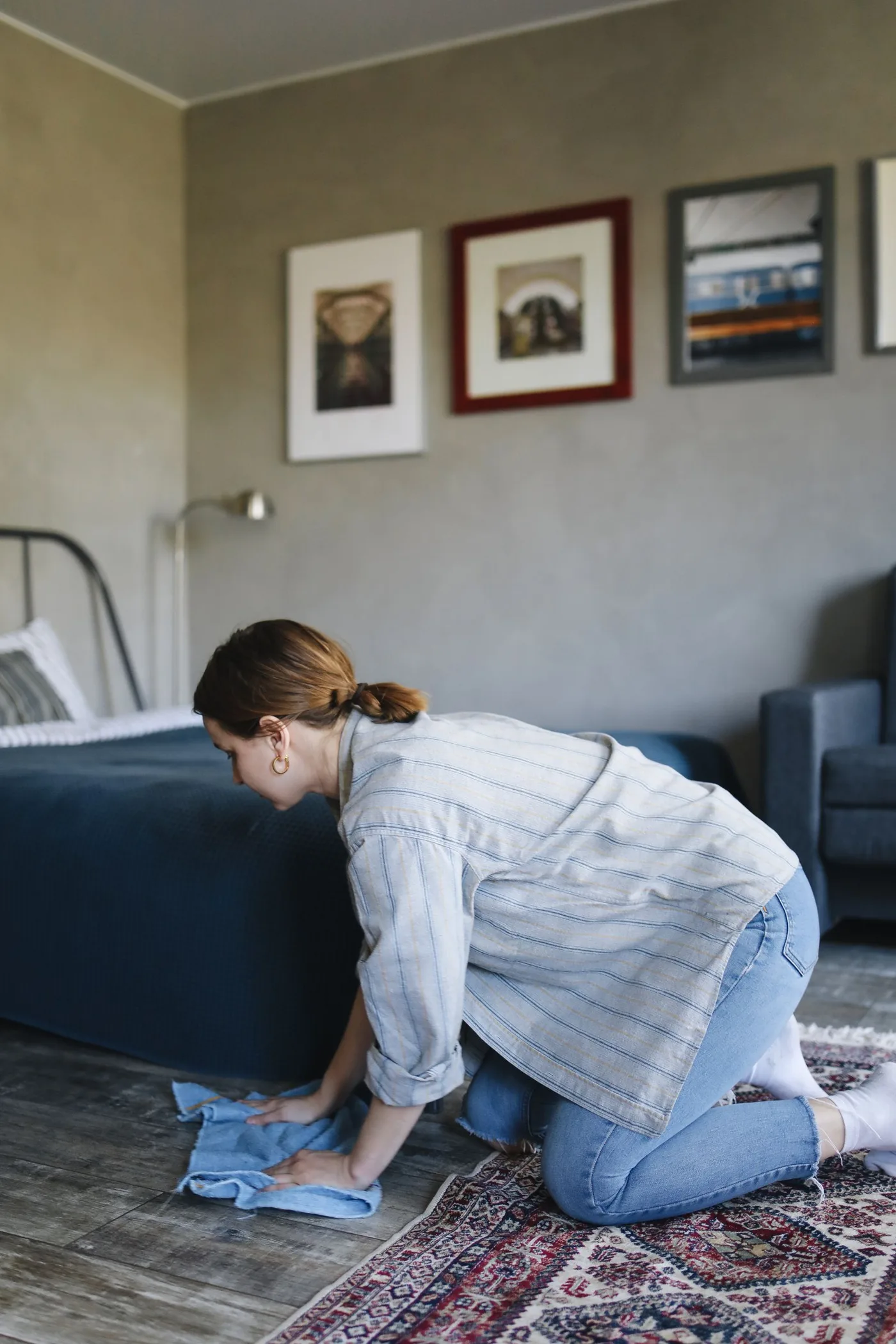
Keep feet and pets away from the spot. Lift solid material gently with an appropriate blunt utensil, then blot liquid with a clean white absorbent cloth. Work without rubbing the spill wider or grinding it into the pile. Use fresh sections of cloth as they become wet.
Note what spilled and approximately when. Coffee with milk, plain water and an oily sauce are not the same problem. Keep the packaging of an unfamiliar product nearby so a professional cleaner can identify it later. Do not add heat to hurry drying or use a household vacuum to collect liquid unless that machine is specifically designed for it.
Find the carpet's care instructions. Fiber type, backing and a previous protective treatment can affect the permitted cleaner. Consult the Carpet and Rug Institute's spot-care resources alongside the manufacturer's guidance rather than relying on a stain recipe that ignores the material.
Test, control moisture and reassess
If a spot product is allowed, test it in an inconspicuous location and allow the test to dry before treating the visible area. Follow the exact label amount and application method. More liquid is not automatically more effective, especially when it reaches the backing or pad.
Apply the treatment in a way that does not expand the wet area. Blot as directed and remove residue using the specified process. Avoid cycling through several chemicals because each one seems to make only a small difference; that can complicate later professional treatment.
Keep the area out of normal traffic until it has dried sufficiently. If the spot returns as it dries, residue may be moving from deeper in the carpet, but a visual check cannot confirm the cause. Record the change rather than repeatedly saturating the surface.
Stop and contact a qualified cleaner when color transfers from the carpet, the pile changes texture or the material remains wet beneath the surface. Explain every product already used. A cleaner can make a better decision with that history than with a freshly perfumed spot and no record.
After the issue is resolved, consider why the spill spread: a table placed over an uneven rug, a container without a lid or a frequently used route through the room. A small layout change may reduce repeat accidents without covering the entire floor in temporary protection.