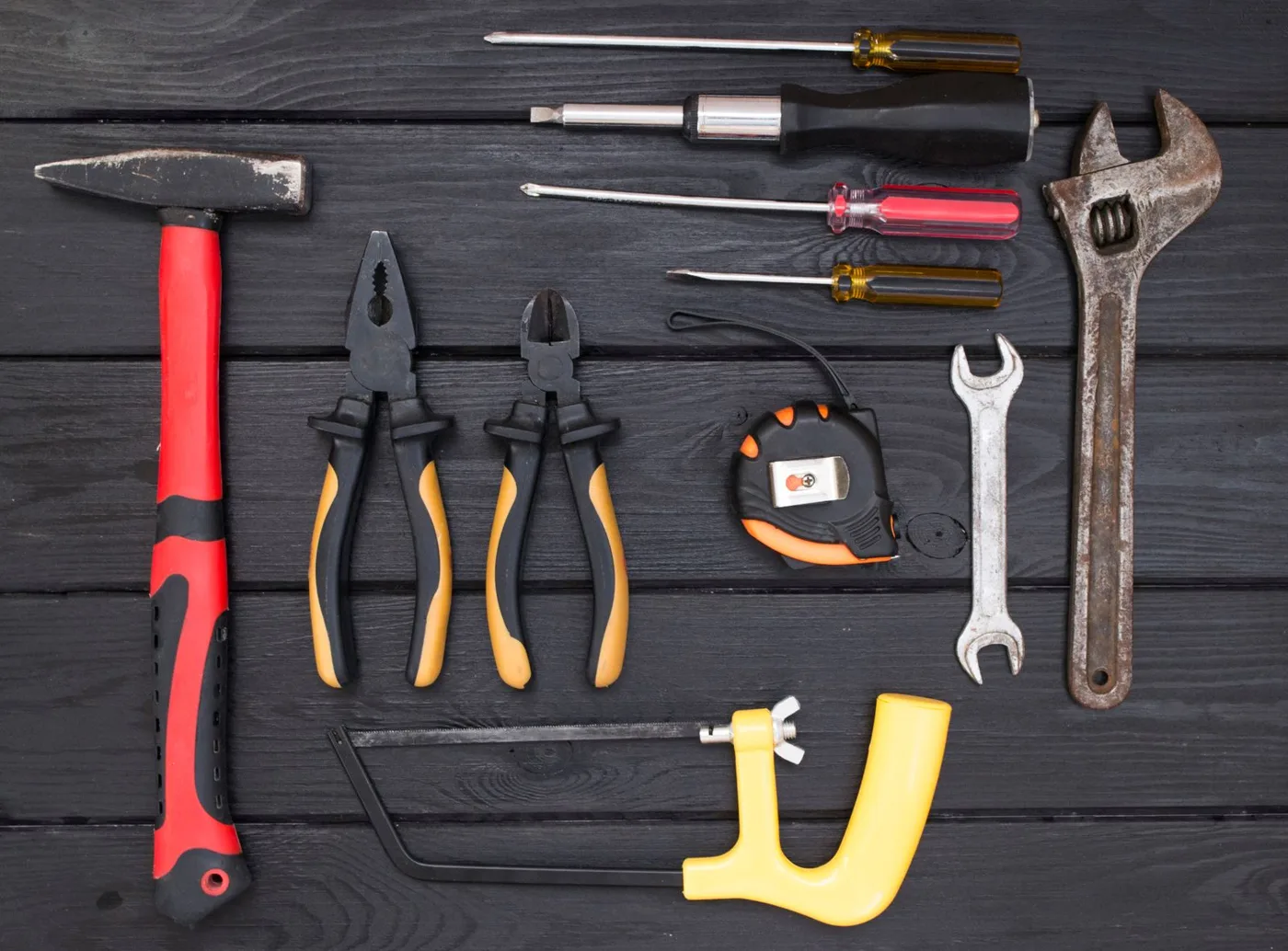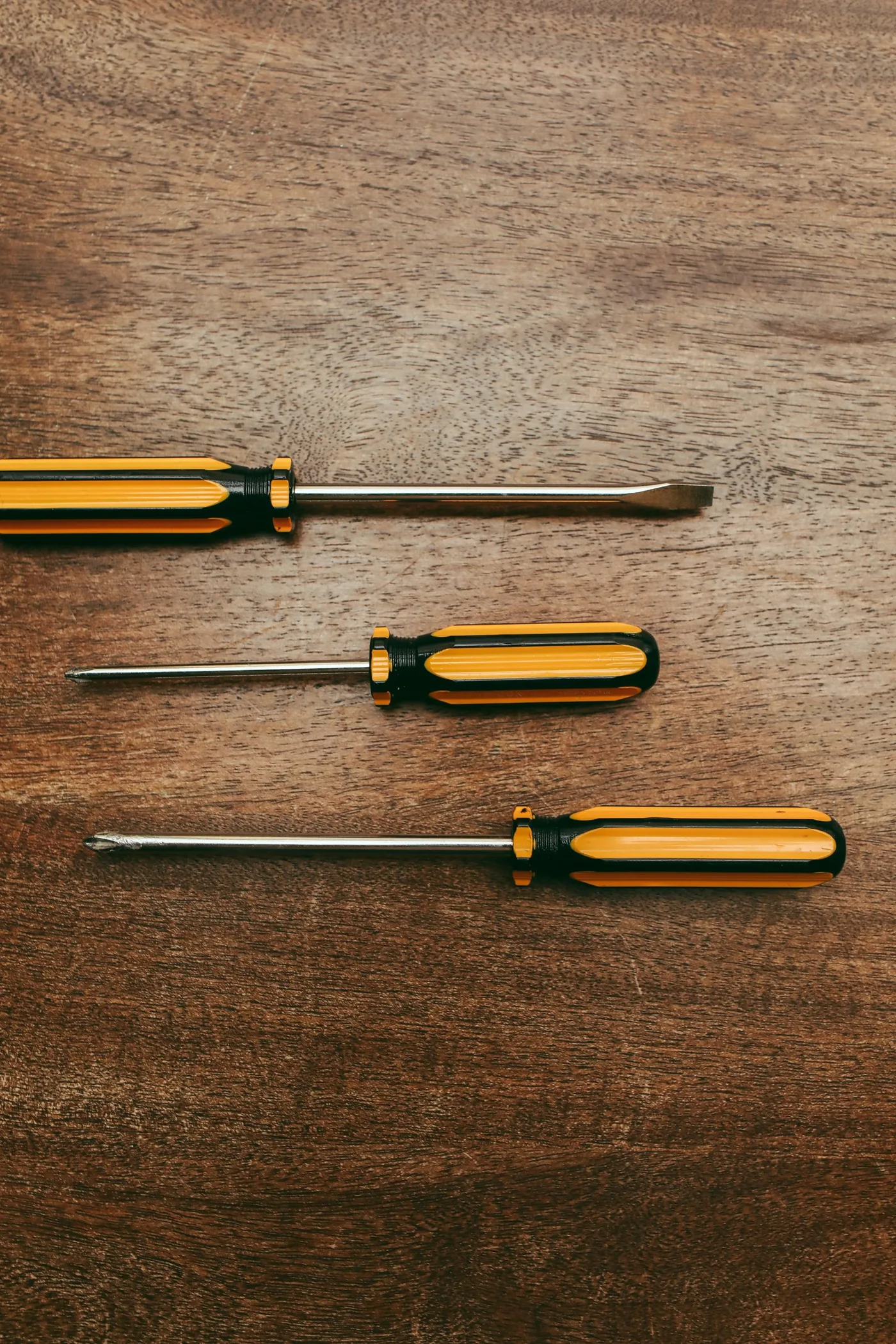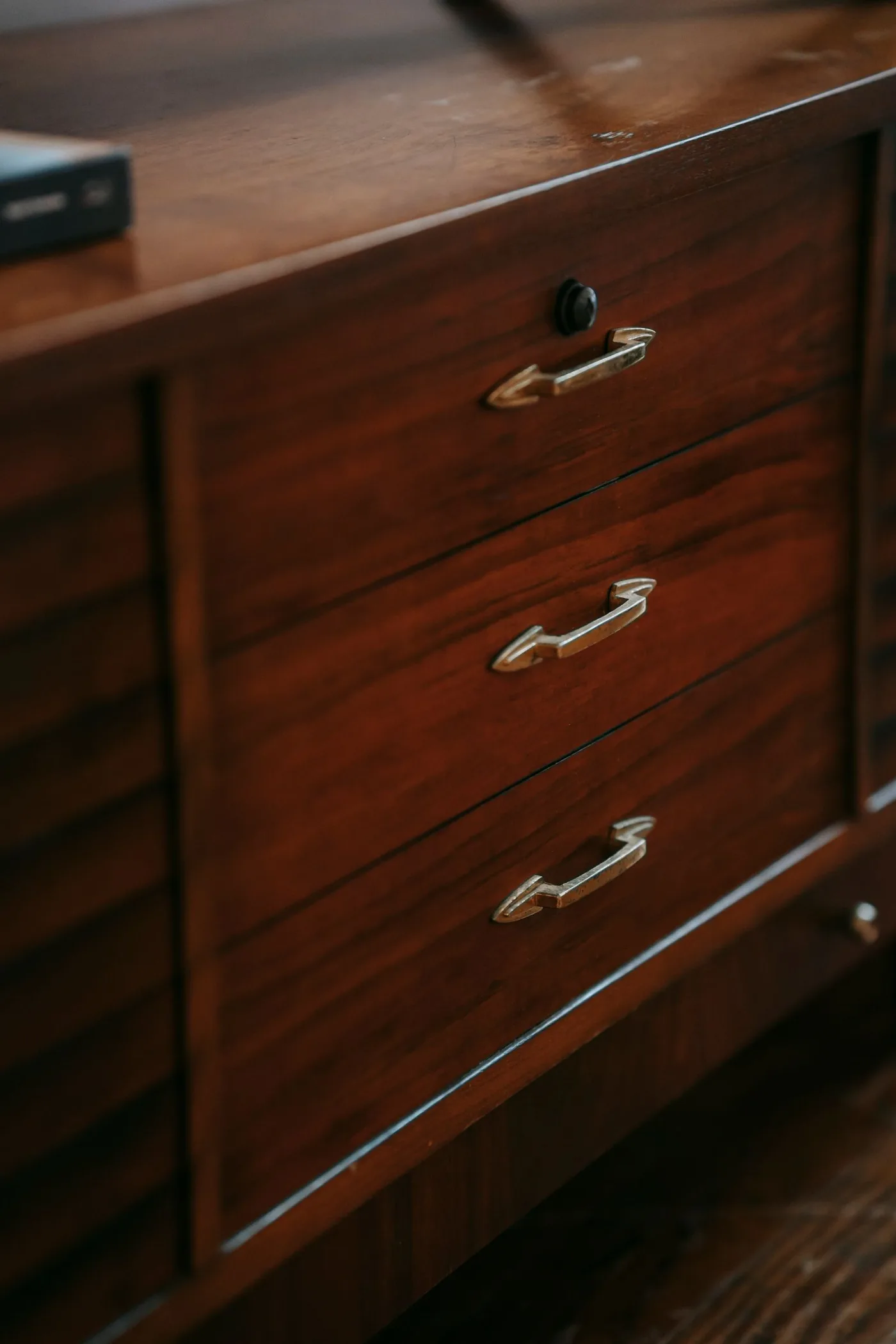
A new drawer knob may use the same hole as the old one but need a different screw. The thickness of the drawer front and the depth of the knob's threaded socket determine how the fastening works. Keeping the old screw without checking can leave the knob loose, damage its threads or press the screw into the visible face.
Measure the complete stack
Remove the existing knob with a correctly fitting screwdriver while supporting it from the front. Put the old parts in a tray. Look at what the screw passes through: a single front panel, a decorative face plus drawer box, or a recess with a washer. Measure that actual thickness at the hole rather than using a catalog dimension for the furniture. Compare the new knob's specified screw diameter and thread with the old fastening. Metric and inch threads may look similar but are not interchangeable. Test only the correct screw gently by hand. If it resists immediately, stop; a powered driver can cross-thread a small fitting before you recognize the mismatch.
Check engagement without forcing the fit
Use the knob manufacturer's recommended screw length or range for the measured panel. The screw must engage adequately without reaching the bottom of a blind socket before the knob clamps the front. A screw that bottoms out can feel tight at the screwdriver while the knob still spins. That is a length problem, not a reason for greater force.
If the supplied hardware is unsuitable, buy the exact specified thread in the appropriate length. Avoid cutting a screw unless you have the skills and tools to leave a clean, usable thread; a damaged cut end can ruin the knob. A random stack of washers may also leave too little engagement or interfere with the drawer interior.
Finish with alignment and a gentle check
Clean the contact area using a method suitable for the finish, then hold the knob in its intended orientation while tightening by hand. Stop when it is secure without compressing the front. With a patterned or shaped knob, take time to align it before the final small turn rather than twisting it against the finished surface afterward.
Open the drawer normally and check that the screw head does not catch stored items or interfere with an inner drawer. If the hole is enlarged, the surface cracked or the front pulling apart, resolve that damage separately. Save the old knob until the new assembly has been checked, and label spare screws with their size so future replacements do not begin with another guessing exercise.