A doorstop protects the place where a moving door would otherwise strike, but its position matters more than its appearance. A stop that catches the wrong part of the door can strain hardware, leave a new mark or create a trip hazard. Start by watching the door's full swing and identifying what needs protection.
Follow the door's movement to choose the stop
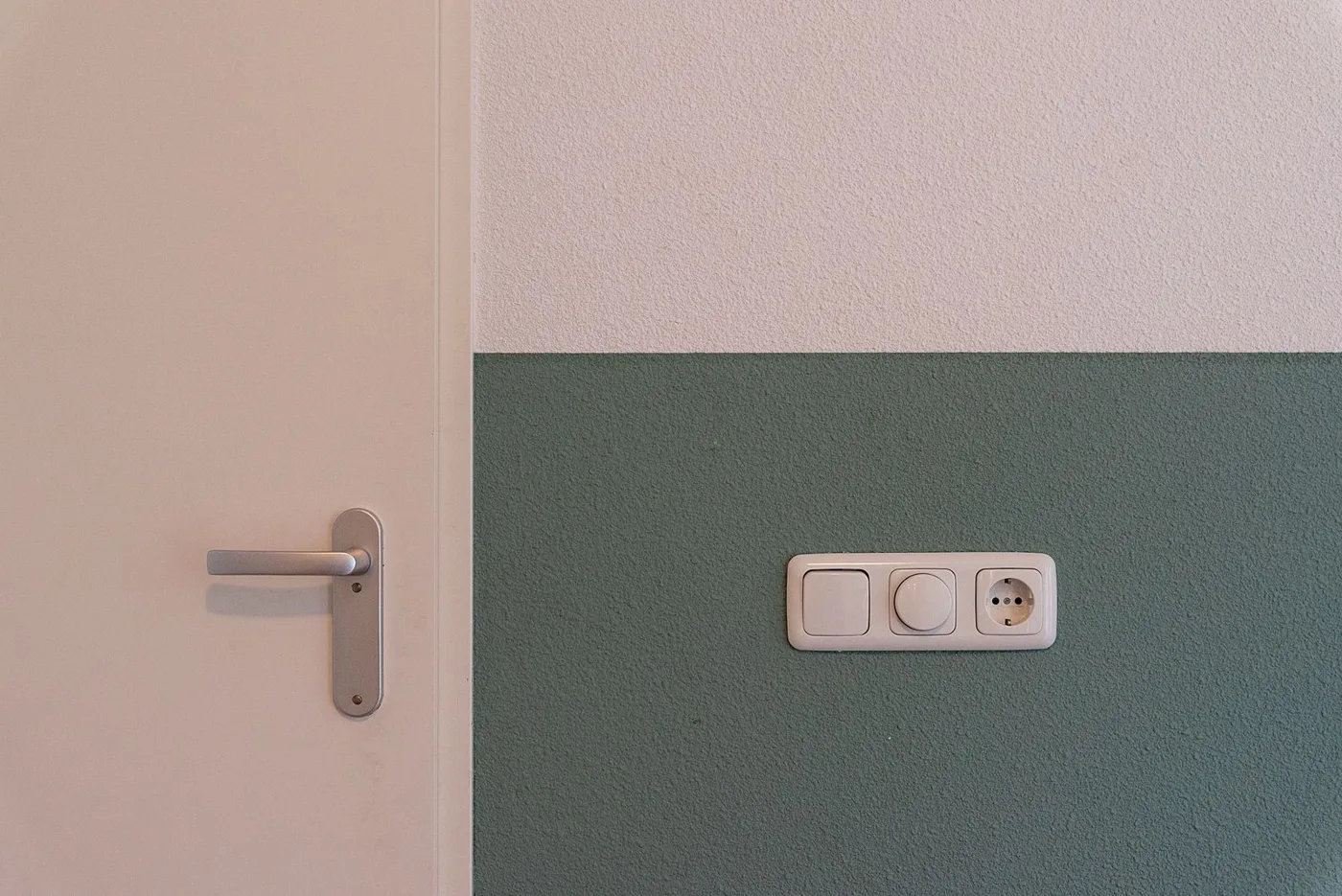
Open the door slowly and note whether the handle, edge or panel approaches the wall first. Check for nearby furniture, a mirror or a second door. Consider the way people actually use the doorway, including carrying laundry or opening it from the other side. A stop that works only when the door is carefully guided is not solving the everyday problem.
If the door has a closer, is part of a fire-rated assembly or serves an emergency route, do not add a device that changes its required operation. Ask the building manager or a qualified installer about the appropriate protection. A doorstop is not a way to defeat an automatic closing requirement.
A wall-mounted bumper needs a suitable contact point and secure mounting. A baseboard-mounted stop needs enough solid material behind it. A floor-mounted fitting must be considered against hidden services, flooring warranties and walking routes. Hinge-pin products also have compatibility limits and can concentrate force on the hinge area.
For a simple movable stop, check that it stays where intended without marking the floor or becoming an obstacle. Do not use a heavy improvised object that can topple, or a small loose piece where children could reach it. If drilling is involved, establish the substrate and concealed-service risks before installation rather than treating the short screw as harmless.
Test gently and inspect the contact
Position the approved product according to its directions. Open the door slowly until it meets the stop, making sure the handle remains clear of the wall. The contact should land on the intended solid area, not on glass, a thin decorative panel or a fragile edge. Avoid slamming the door as a test of strength.
After several ordinary uses, look for shifting, loose fasteners or a compressed bumper. A rubber or plastic contact piece can harden, wear or transfer color, so replacement may be needed before the fitting itself fails. If the door continues to hit unexpectedly, revisit its swing and the stop location rather than layering adhesive pads over the new marks.