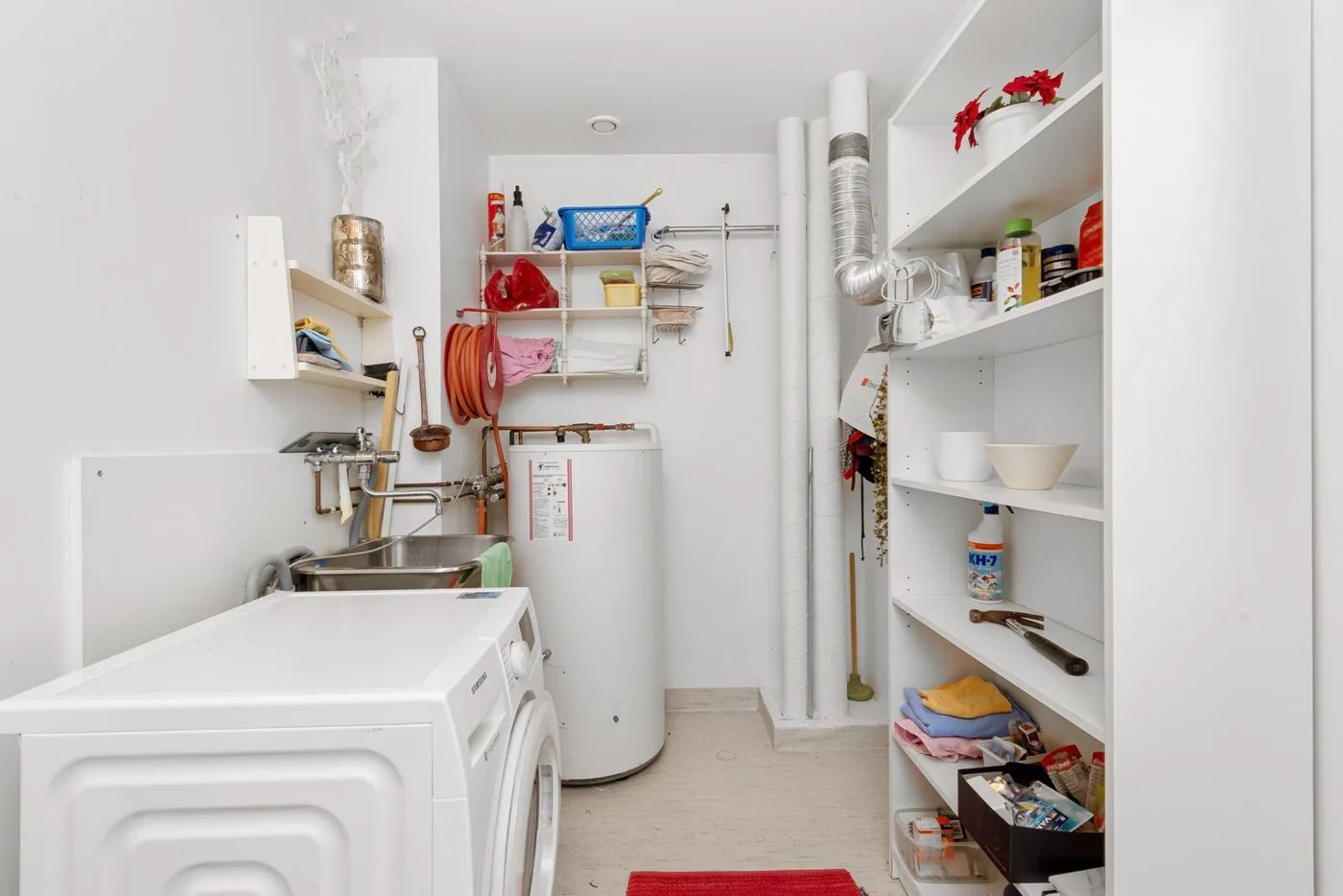
Utility rooms often become storage rooms by accident. A box is set beside the furnace for a day, then another appears in front of an access panel. Keep equipment clearances and service access as fixed boundaries, not spare space available whenever a closet fills up.
Find the actual clearance requirements
Read the equipment labels and manuals for required space around the unit, vents and service panels. Different appliances and installations have different requirements. Do not copy a single distance from one heater and apply it to every mechanical system.
The US Fire Administration advises keeping combustible materials away from heat sources. That fire-safety principle sits alongside equipment-specific airflow and service clearances. Paper, clothing and cleaning products should not be stored against a furnace or water heater simply because the surface feels cool today.
If the requirements are unclear, ask the service provider to identify the boundaries at the next appropriate visit. Do not cover or remove warning labels to make a storage shelf fit.
Remove the creeping obstructions
Move lightweight stored items to a suitable location without touching piping, wiring or hot surfaces. Do not hang bags from valves or use a flue as a support. Get help when a heavy object cannot be moved safely.
Keep the path to shutoffs and controls open. A clear space directly in front of the unit is not enough if reaching it requires moving several bicycles. Check that doors can open fully and that stored objects cannot fall into the equipment.
Follow product labels for storing paints, fuels and household chemicals. A mechanical room is not automatically an appropriate place for them. Do not combine leftover products or relocate them into unlabeled containers to reduce the number of bottles.
Use storage that respects the boundary
Choose shelving only after the service and clearance area is established. Mark the storage zone in a household plan if helpful, without attaching anything to the equipment. Leave room for a technician to work, not merely enough space for one person to squeeze through.
Review the room after seasonal changes, moving days and major shopping trips. Those are common times for temporary boxes to become permanent. Assign a different place for items that repeatedly return to the mechanical area.
At a service visit, ask whether the arrangement leaves suitable access and airflow. Record any change requested. If equipment is replaced, revisit the storage layout because the new unit may need different clearances.
Keep this task observational. New scorching, fuel odor, unusual equipment behavior or damaged connections needs prompt appropriate help rather than a quick tidy followed by normal operation.