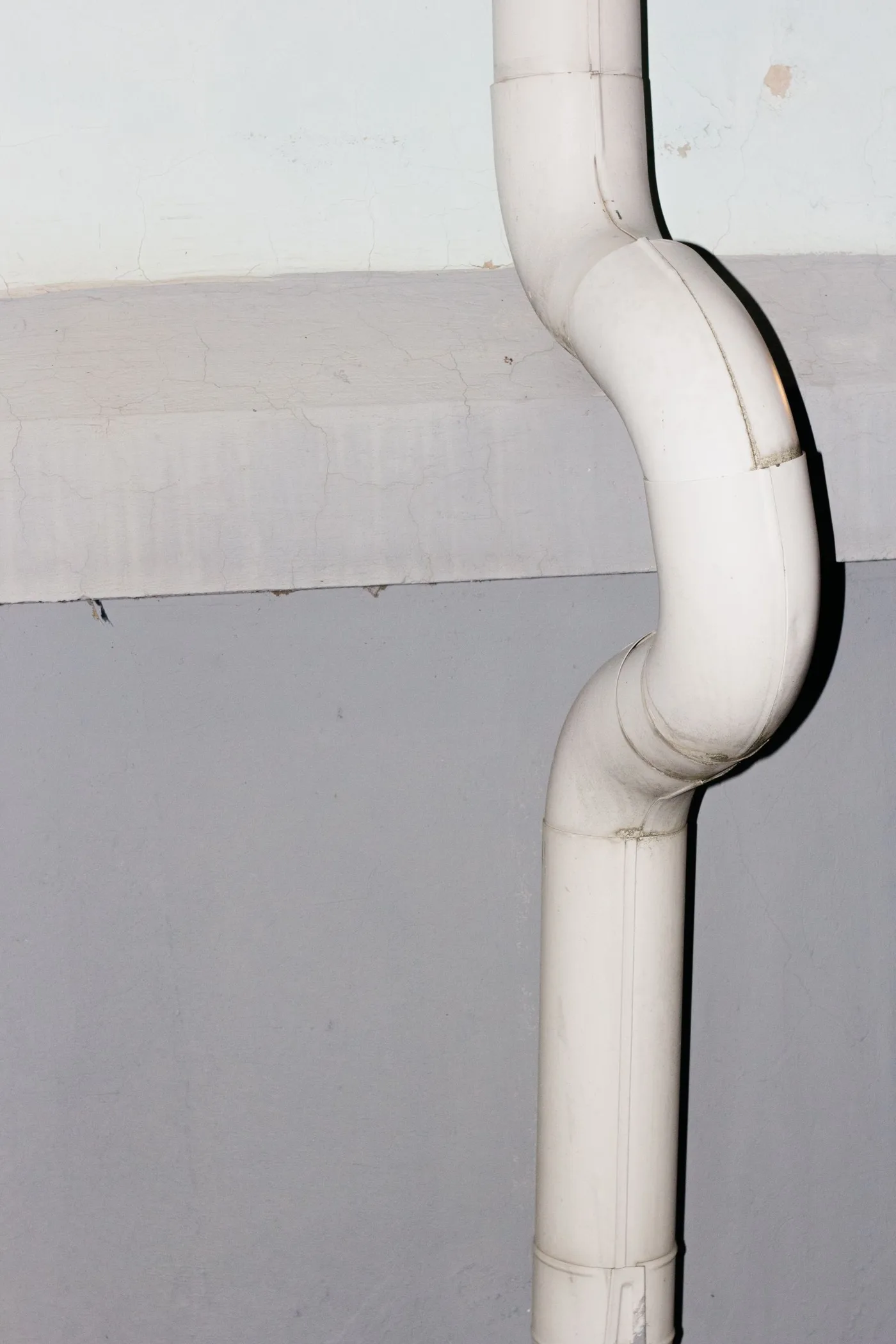
A downspout can carry water successfully from the roof and still leave it too close to the house. The outlet, ground slope and route beyond it all matter. Observe where discharge goes during safe conditions before adding an extension that creates a trip hazard or redirects water onto somebody else's property.
Follow the visible route
Start at the accessible outlet and look for pooling, erosion, a disconnected section or an obstruction. Do not open underground drainage connections or reach into an unseen pipe. A buried system's route and condition may need professional investigation.
During safe rainfall observations, note whether water leaves the outlet freely and where it spreads. Keep away from floodwater and unstable ground. A photograph after rain can show a persistent puddle without requiring anybody to stand in the flow.
Check whether a mower, garden storage or a shifted paving slab has changed the outlet arrangement. A removable extension that is repeatedly knocked aside may not be a dependable solution for that location.
Consider the whole path, not one distance
Moisture-prevention guidance emphasizes directing water away from the building. The suitable arrangement depends on the site, slope, soil, drainage system and applicable local requirements. Avoid treating one internet distance as a universal design rule.
Do not send water across a public walkway, toward another building or into an unapproved connection. Before changing a shared or boundary drainage arrangement, get the relevant professional or local advice. A cheap extension can be costly if it moves the problem elsewhere.
Keep any approved surface extension stable and visible enough not to become a trip hazard. It should not obstruct an exit, a regular access route or equipment. Ask about a more suitable permanent arrangement if everyday use makes the temporary one impractical.
Document repeated problems
Record when water collects, how long it remains and whether nearby indoor moisture appears at the same time. The timing is useful evidence, but it does not prove the downspout is the only source. Share both indoor and outdoor observations with the assessor.
If the outlet is clear but water still backs up or pooling returns, request investigation of the system rather than continually adding length. Hidden blockages, grading and other drainage issues need a considered solution.
After a change, observe the next suitable rainfall from a safe place and keep the result with the repair record. Seasonal leaves, moved garden furniture and landscaping work can alter a previously clear route, so include the outlet in ordinary ground-level checks.