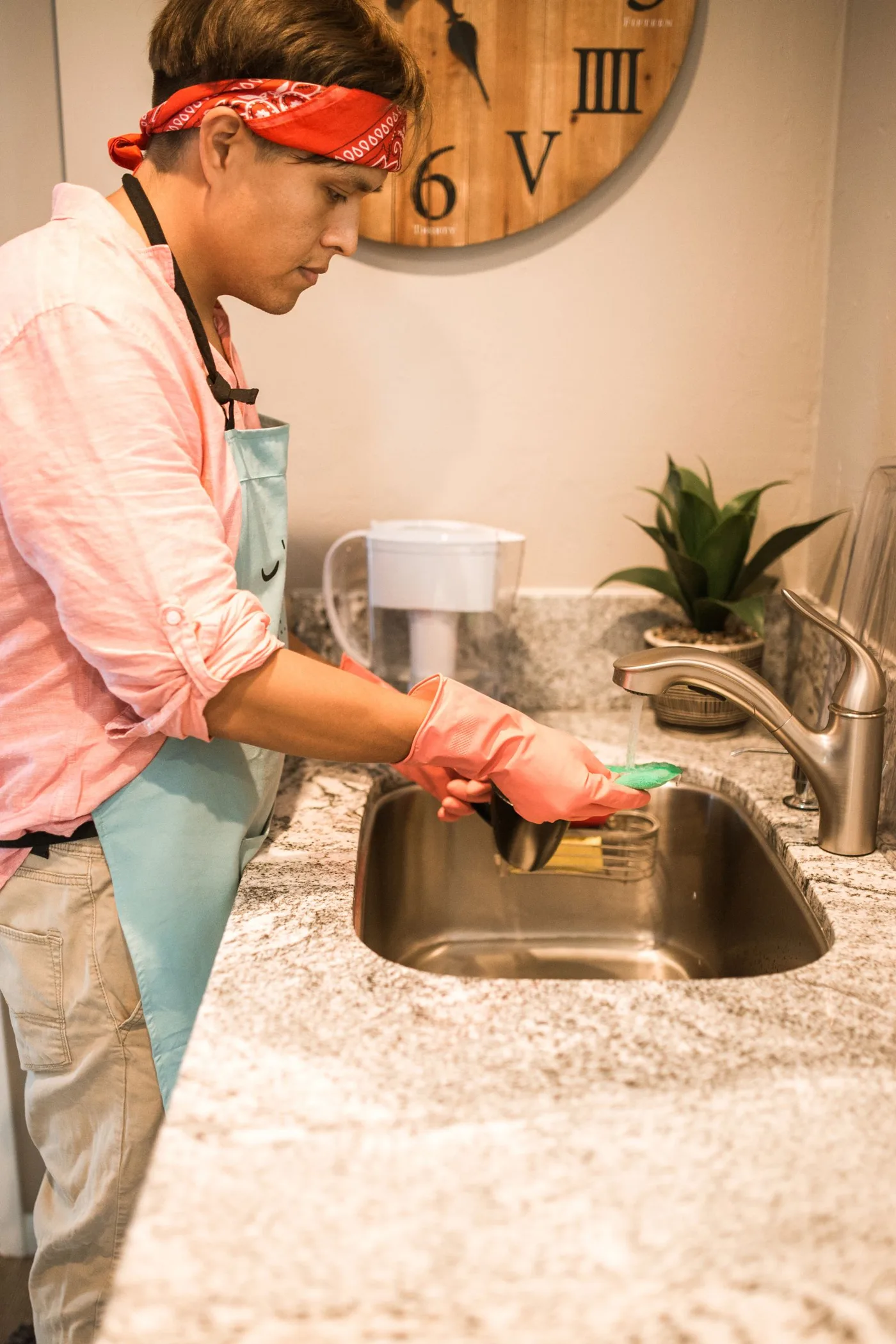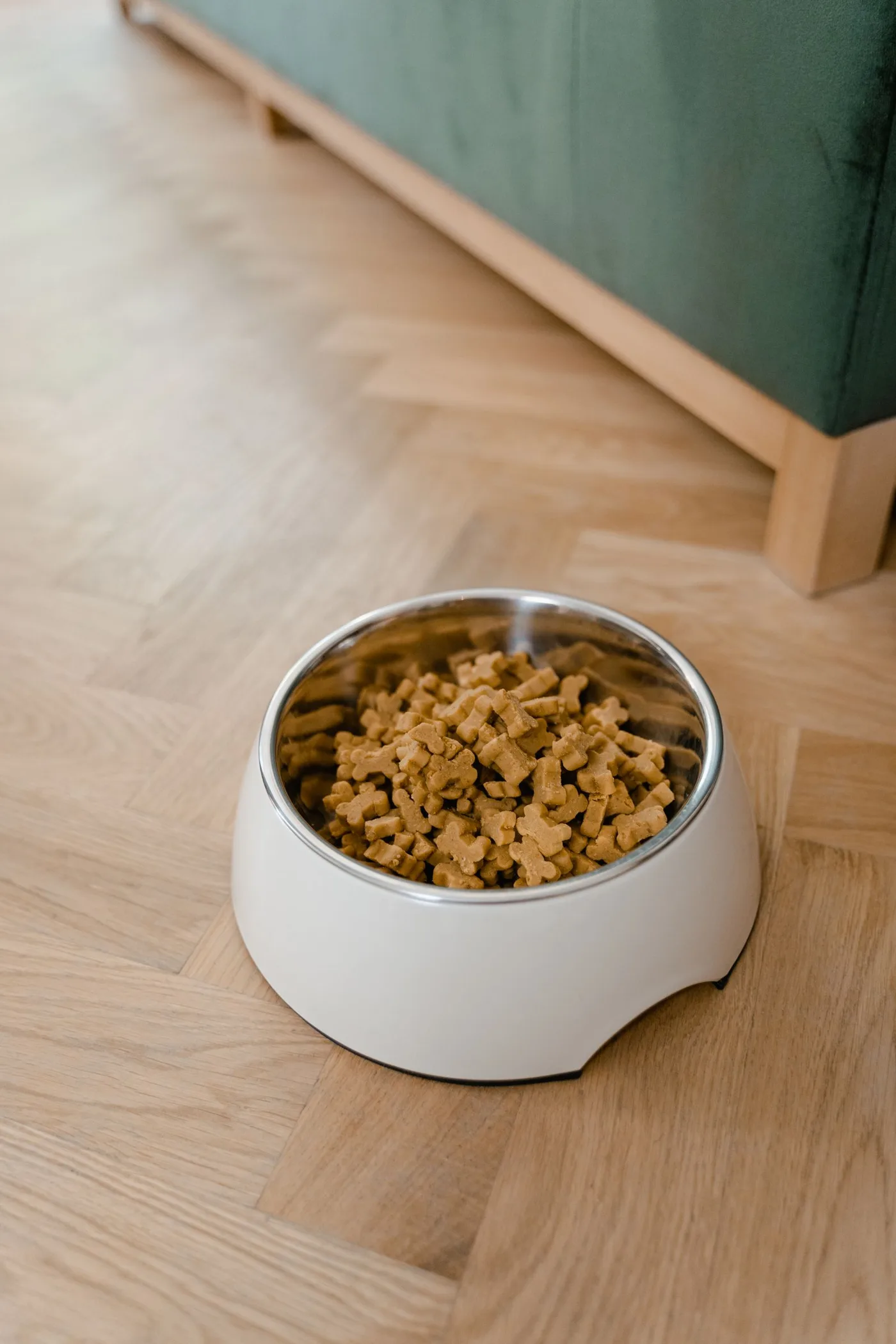
A pet feeding corner collects food residue, splashes and dust in a small area. Strong fragrance can make it seem freshly cleaned without removing what is underneath the bowl. Build the routine around washable items, thorough rinsing and a dry place to set everything back.
Separate the bowls from the floor task
Move the pet away while cleaning so it cannot lick products or walk across a wet surface. Empty remaining food appropriately and remove the bowls, mat and any removable stand. Use the care instructions for each item; a dishwasher-safe bowl does not make its rubber base or decorative stand dishwasher-safe.
CDC recommends cleaning wet-food bowls after each use and dry-food and water bowls daily. Use a suitable washing method, rinse away detergent and dry as appropriate. Wash hands after handling the feeding equipment and keep its cleaning tools distinct from other household tasks.
Look beneath the mat
Collect loose crumbs before wiping the floor. Lift the mat fully rather than cleaning only its visible edge. Check for trapped water, damaged backing or a sticky patch beneath the stand; these are easy to miss when the bowl is simply refilled in place.
Clean the floor with a product approved for that material and follow any instructions about pets, rinsing and drying. A product marketed as natural is not automatically safe to leave where an animal can lick it. Do not add essential oils or fragrance to a cleaning solution.
If disinfection is needed because of illness or another specific concern, ask the veterinarian for relevant advice and use an appropriate labeled product. Do not substitute scent for hygiene or combine chemicals to make a stronger treatment.
Reset a feeding area that is easy to maintain
Return only dry, sound items. Replace cracked bowls, damaged mats or stands that trap residue in inaccessible seams. A smooth washable arrangement is generally easier to inspect than several decorative layers stacked together.
Choose a location away from heavy foot traffic without blocking an exit or forcing the pet into an awkward posture. Keep cleaning supplies inaccessible and do not store them beside open food. If bowls repeatedly slide or water spreads beyond the mat, solve that layout problem instead of making the cleaning product stronger.
Store pet food according to its packaging and clean scoops or treat containers as needed. The feeding area is more than the bowl itself; a greasy scoop handle can transfer residue back to a freshly cleaned surface.
Observe whether the routine actually removes visible residue and allows the area to dry. A quick daily check of the mat's underside can catch a persistent splash pattern before it affects the floor finish.