A small nail hole in sound, modern painted drywall is a modest repair, but the surrounding surface determines the method. A hole in crumbly plaster, a damp patch or an old unidentified coating should not be treated as an ordinary cosmetic defect. First decide whether you are filling a tiny indentation or trying to hide a larger problem.
Confirm a simple cosmetic repair
Look for swelling, staining, loose paper or a crack that extends away from the hole. Those conditions need their cause addressed before decoration. If the wall has an older unknown finish, particularly in a pre-1978 US home, avoid disturbing the coating until lead risks have been assessed. Suspect textured materials also deserve professional advice rather than exploratory sanding.
For sound drywall with a known suitable coating, select a ready-to-use filler labeled for small interior wall repairs. Read its limits on hole size, depth, drying and priming. Wood filler, flexible caulk and drywall patching products do different jobs. Buying the smallest appropriate container also reduces the chance of using an old dried-out product on the next repair.
Use less filler than you expect
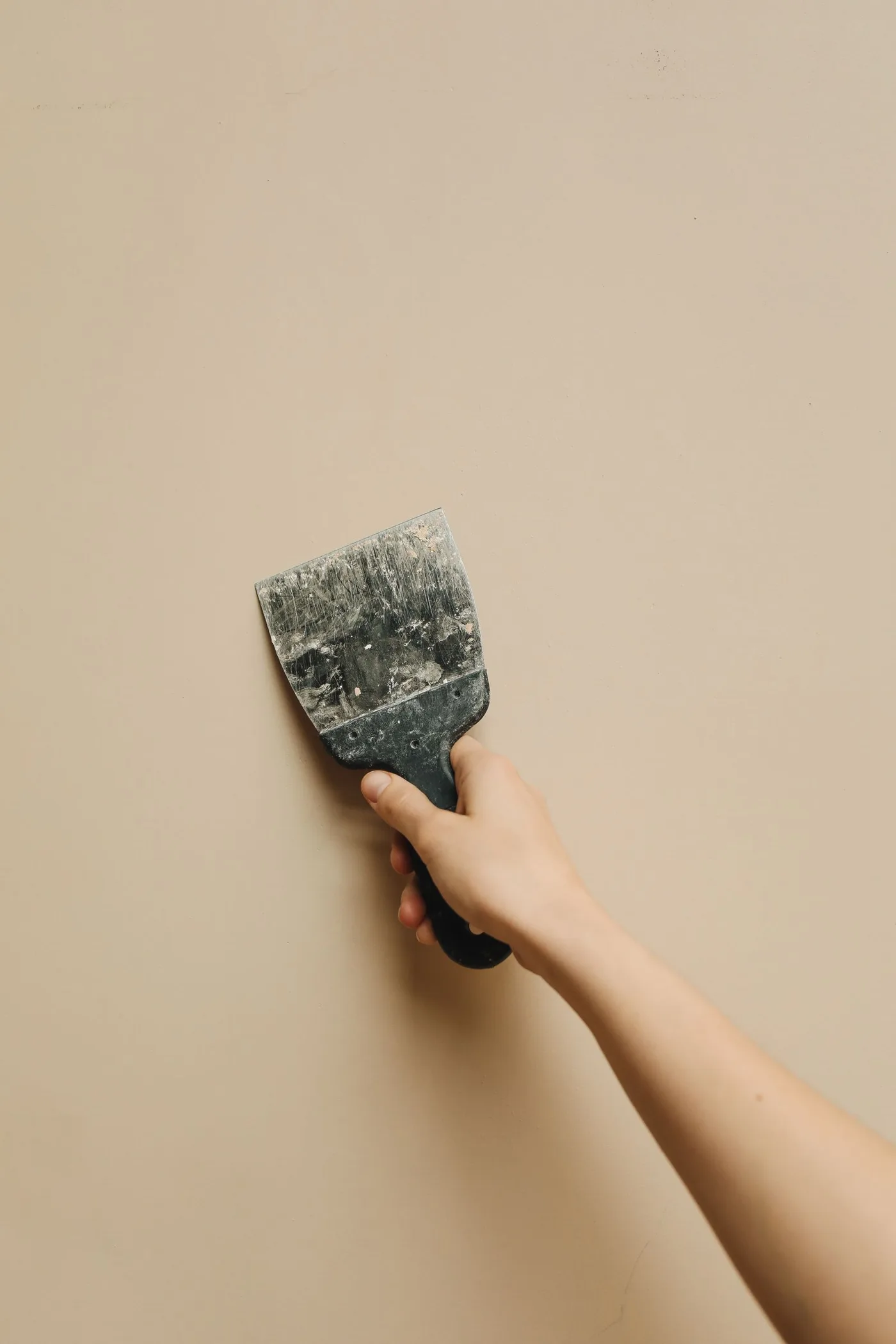
Protect the floor and nearby furniture. Remove loose surface dust gently without enlarging the damage. With a clean small putty knife, press the filler into the hole and draw off the surplus so the surrounding area remains thin. A large mound creates more finishing work and can leave a visible raised island after painting.
Allow the repair to dry for the actual product conditions. A surface that looks pale or feels firm at the edge may still be soft deeper inside. If the filler shrinks into a hollow, apply the additional thin coat permitted by its directions instead of covering the depression with thick paint. Clean the knife before the material hardens on its edge.
Make the finish blend, not just the color
Inspect the dry patch with light coming from the side. Remove only the small high spots by the product's approved finishing method, controlling dust and protecting your eyes. Do not sand through the surrounding wall paper or create a smooth crater in a textured finish. If sanding is inappropriate for the coating, seek a compatible low-disturbance method.
Prime the filled area if the filler or paint system calls for it, then apply matching paint with the same type of applicator used nearby. Color, sheen and texture all affect visibility. A small touch-up can remain noticeable on an aged or glossy wall even with the correct paint. Let it dry fully before deciding whether the whole wall plane needs repainting.
Before opening leftover paint, check its label and condition. Two cans with the same color name may have different sheens or product lines. Stir and test only paint that remains usable according to its maker. If you no longer have a reliable match, take the wall's lighting and surrounding finish into account when asking a paint supplier for help. Matching a sample does not guarantee an invisible isolated touch-up on an aged wall.