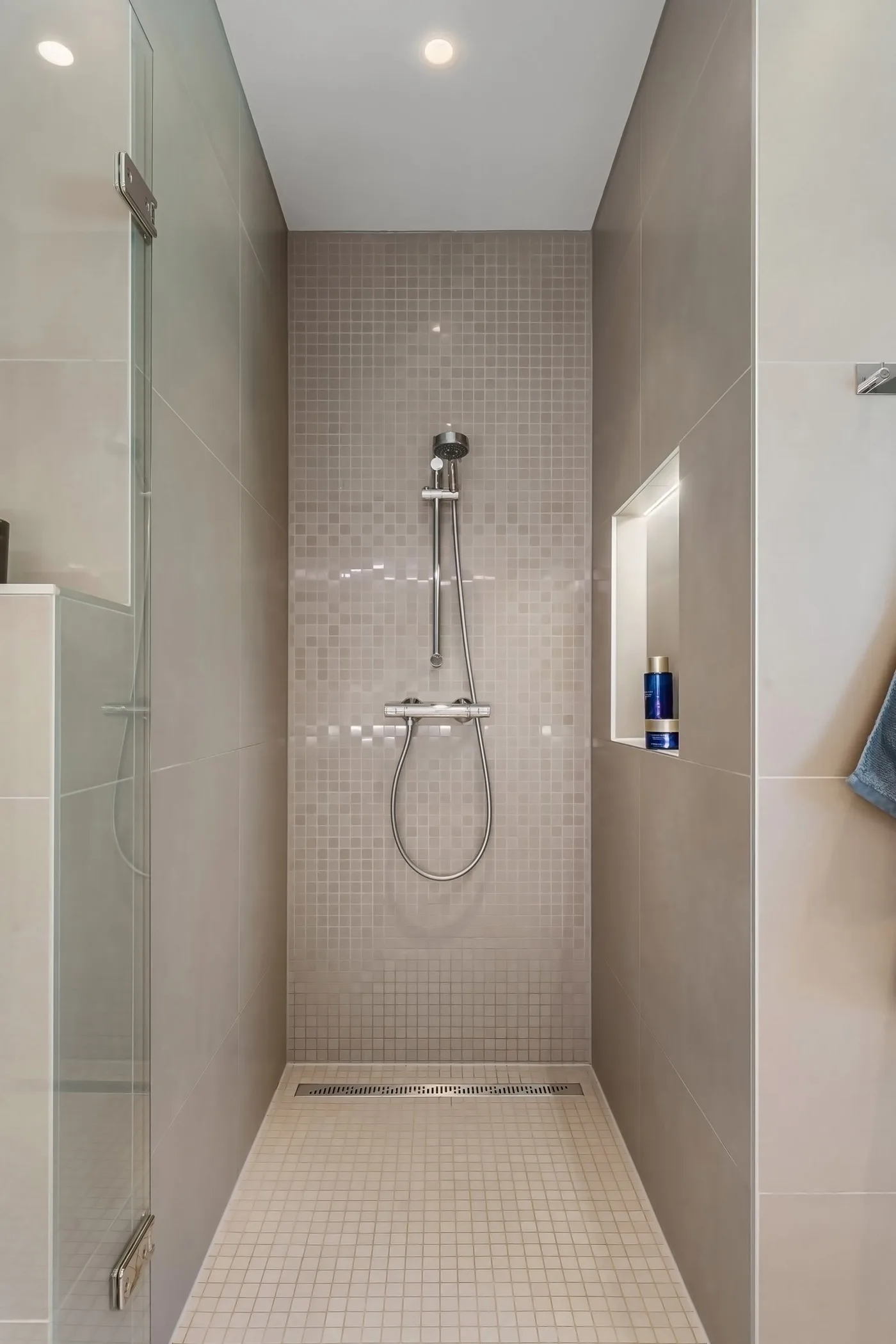
A shower door can sit only inches from marble, limestone or a delicate metal finish. A product that removes mineral spots from glass may damage those neighbors. Plan the whole spray and runoff path before treating the pane; the glass is not an isolated object.
Map the surrounding materials
Identify the shower-door coating, frame finish, sealant and wall or floor material. Ask the installer or manufacturer when the paperwork is unclear. Glass with a protective treatment may have restrictions that ordinary window-cleaner advice does not address.
Natural Stone Institute guidance warns against acidic cleaning products on natural stone. That includes a casual vinegar treatment where splashes or drips can reach a stone curb. Do not assume that covering a small area with a towel makes an incompatible chemical safe to use nearby.
Start with the least complicated compatible routine
Remove loose soap residue using the shower manufacturer's approved method and a soft tool. Apply the product in the controlled way its directions allow, rather than spraying across a broad area. Work from a stable position without leaning on the door or its handle.
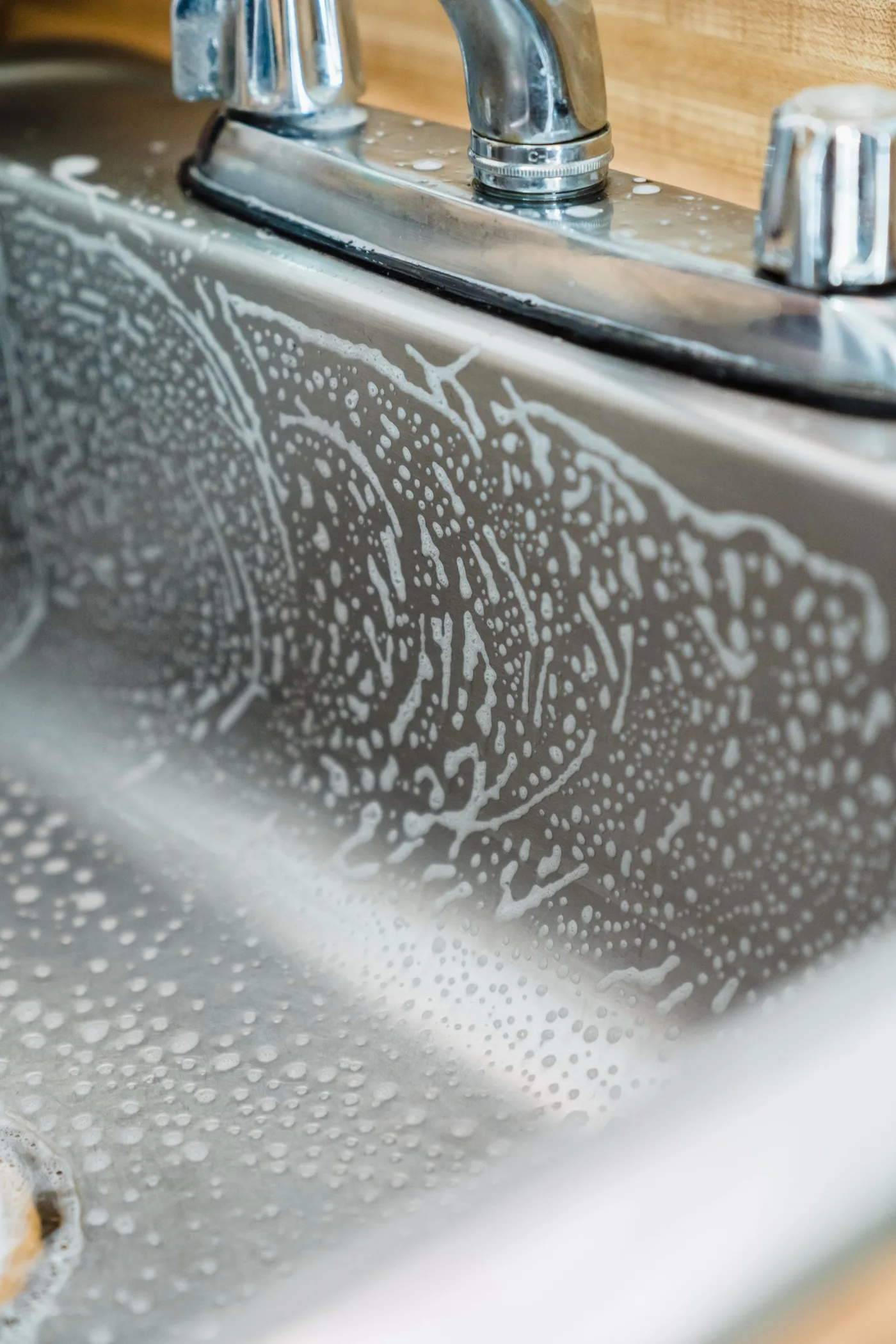
Rinse and dry as directed before deciding whether a remaining mark needs another treatment. Soap film, mineral deposits and damage to a coating can look similar through wet glass. If the first routine does not improve the spots, identify the cause with the supplier instead of cycling through unrelated cleaners.
Clean the accessible lower track or seal gently, keeping designed drainage openings clear. Do not remove seals or scrape around their edges merely to reach a line of residue. A loose seal, cracked pane or shifting hinge calls for repair assessment, not more vigorous cleaning.
Reduce the amount left to dry
After showering, a compatible squeegee or soft cloth can remove much of the water from the pane. Keep the tool clean so trapped grit does not travel across the glass. Use a separate cloth for surrounding finishes if they have different care requirements.
Give the base and curb a chance to dry instead of placing bottles where they trap water. Keep the bathroom's ventilation in use as intended. A daily drying habit will not correct a leaking enclosure, so investigate puddles that continue to appear outside it.
When asking a cleaner for help, describe the stone and coatings before requesting a price. A useful brief says 'glass enclosure next to a limestone curb' and includes a photograph. That gives the provider a reason to plan material protection instead of arriving with a standard descaling spray.