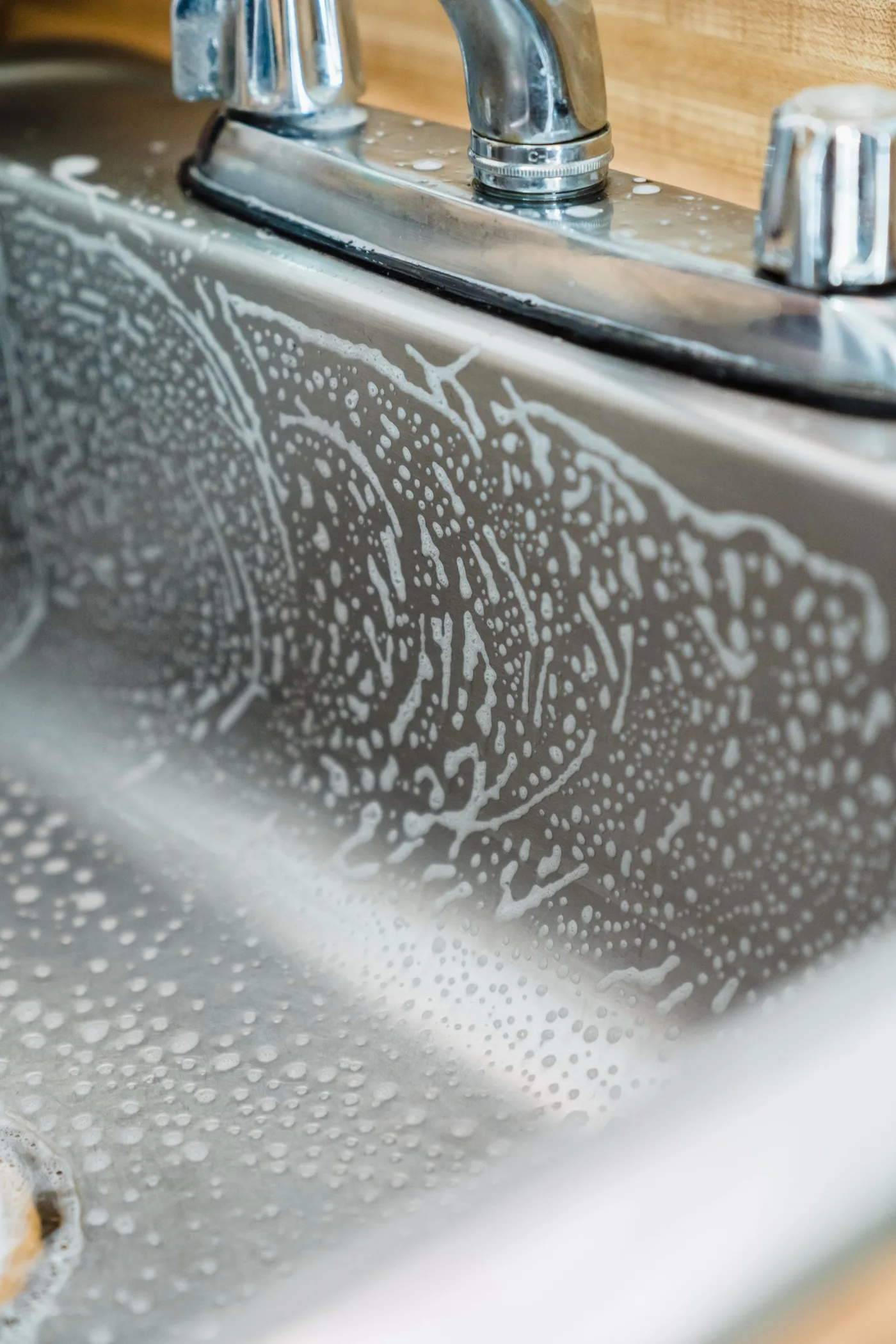
A faucet's color is not a reliable cleaning specification. Chrome, a plated finish, painted-looking coatings and living finishes can react differently to the same product. Before attempting to remove water spots, find out what surface is actually on the fitting and which cleaners its manufacturer permits.
Use the model information, not a visual guess
Check the receipt, installation paperwork or manufacturer's model finder. A finish suffix can be as important as the main faucet name. If you inherited the fitting with the house, send the maker a photograph rather than choosing a cleaner because the faucet looks like stainless steel.
Inspect the base and handle for loose parts, peeling or persistent water. A ring that returns immediately may involve a small leak rather than hard-water residue. Cleaning can reveal that pattern, but it cannot settle whether the seal or fitting needs attention.
Keep the routine controlled
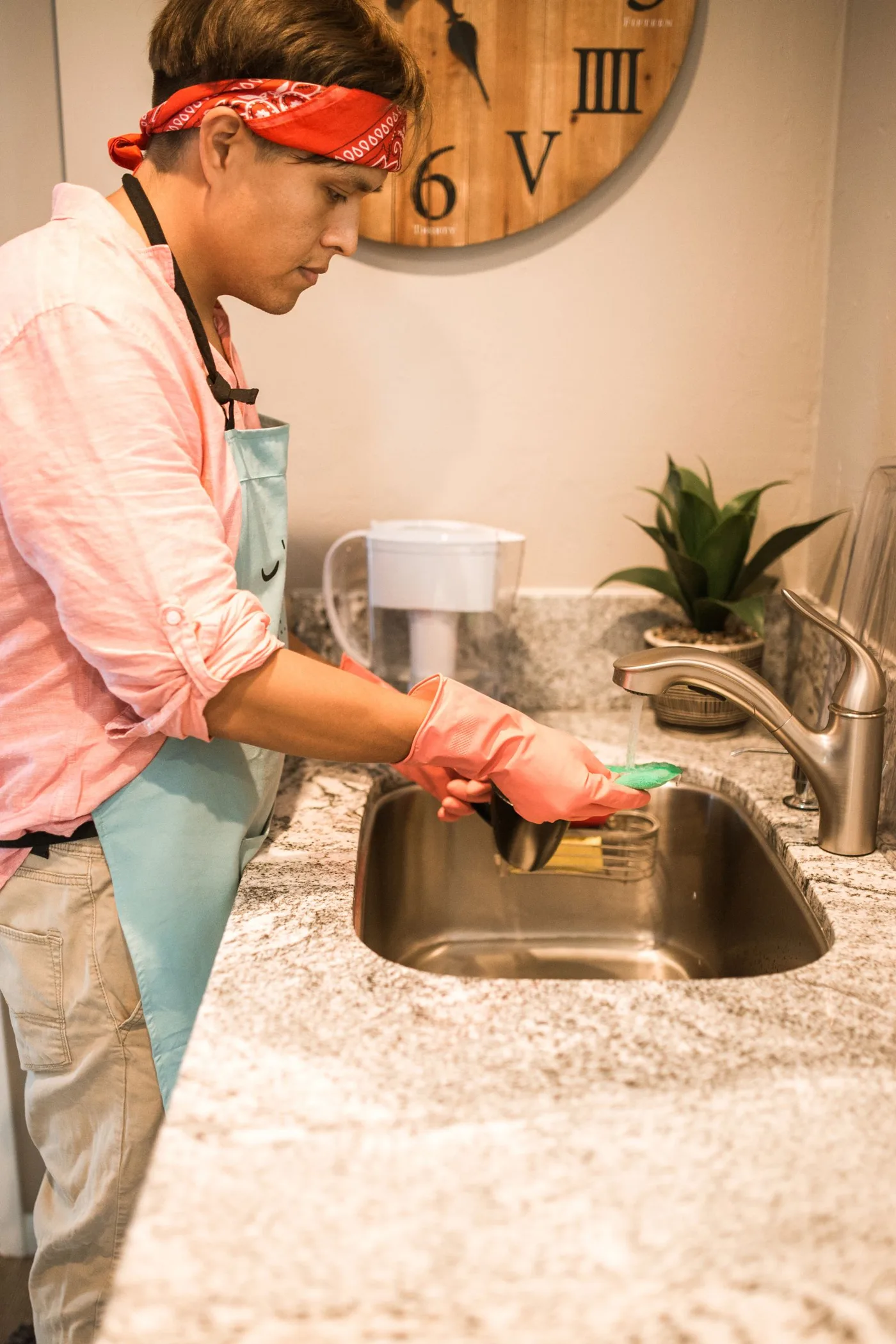
A soft damp cloth followed by gentle drying is a useful starting point when allowed by the maker. Delta's care guidance emphasizes nonabrasive wiping and removing water from the finish. More specialized spot removal should follow the directions for the exact product and finish.
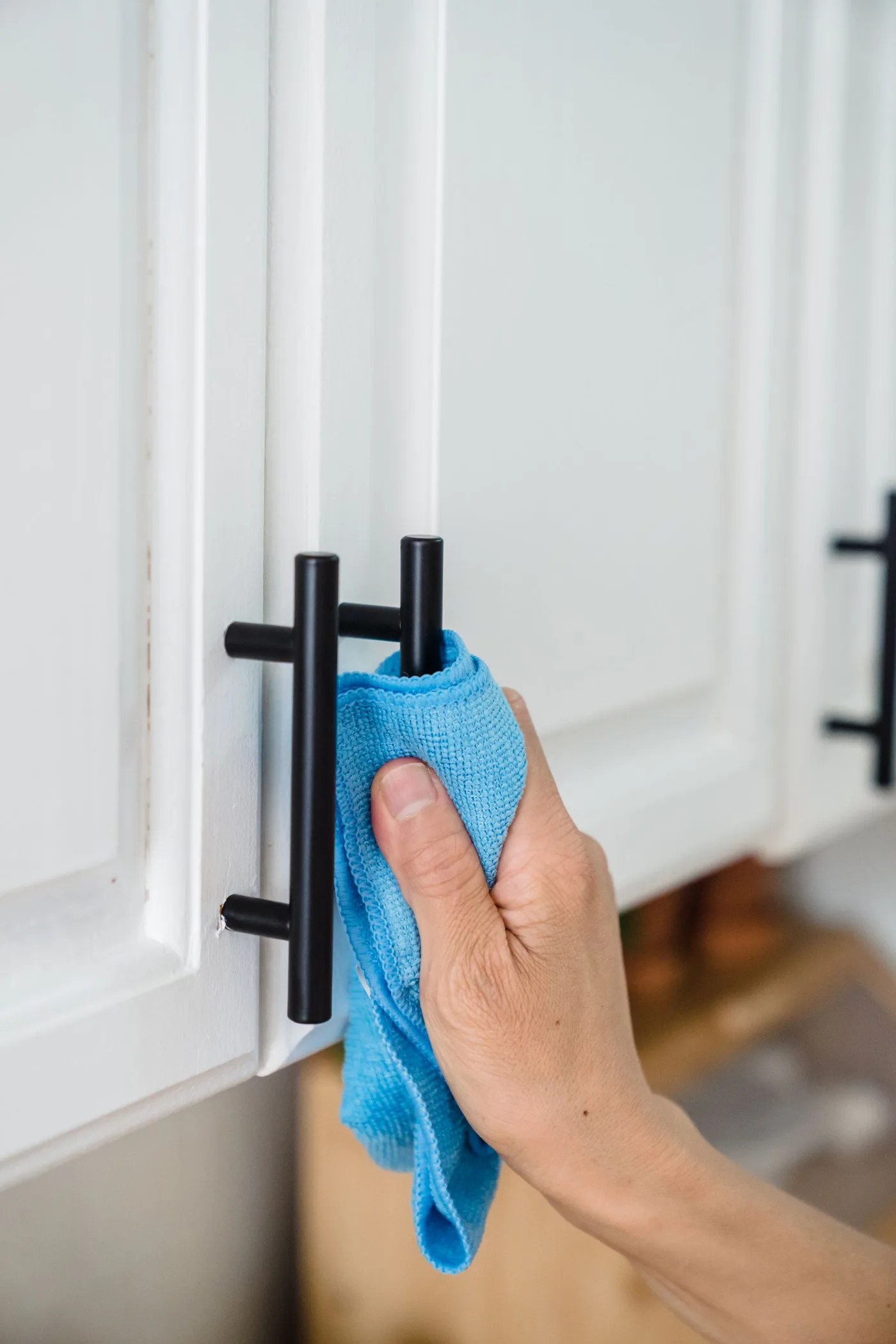
Apply only the approved amount and avoid letting liquid sit around seams. Use a folded corner of the cloth around the handle instead of reaching for a scratchy pad. Wipe the countertop afterward so runoff does not remain on nearby stone or wood.
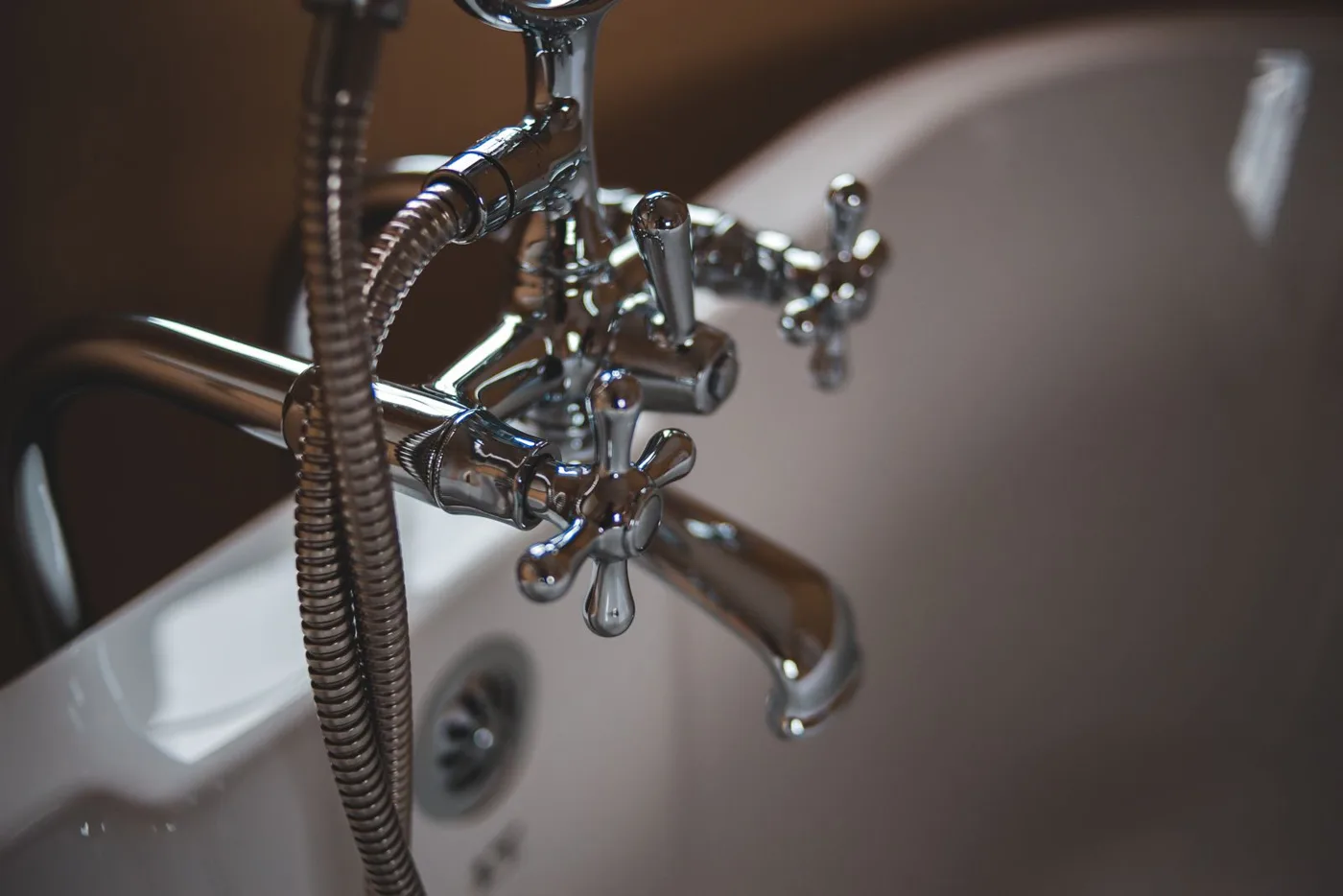
Treat the drain fitting and shower accessories as separate products if they are from a different range. A matching color does not prove matching chemistry. Never transfer a descaling treatment from one fixture to another without checking its suitability.
Do not polish through a problem
If a surface looks patchy after drying, stop before trying metal polish. Some finishes are intended to change with use; others have a protective layer that polishing can remove. A photograph taken in daylight can help customer support distinguish deposits from finish deterioration.
For an aerator that needs attention, use only the removal and cleaning procedure provided for that model. Do not grip decorative parts with bare pliers or force a component that will not release. A special key may be required, and some work is better left to a plumber.
Keep a small clean drying cloth near the sink if water spots are a recurring annoyance. Replace or wash it before it carries grit. The simplest maintenance habit is often removing visible droplets after use, while reserving chemical treatment for deposits that genuinely need it.