A dishwasher cleaning cycle and a filter clean solve different problems. A maintenance tablet may help with deposits inside the machine, but it does not necessarily remove a piece of food caught in a removable filter. Before buying another product, check which filtration system your dishwasher actually has.
Find the consumer-removable part
Use the model number to locate the manual. Some dishwashers have a filter designed to twist out by hand; others use a different system. Do not unscrew a pump cover because an online demonstration for another machine shows one.
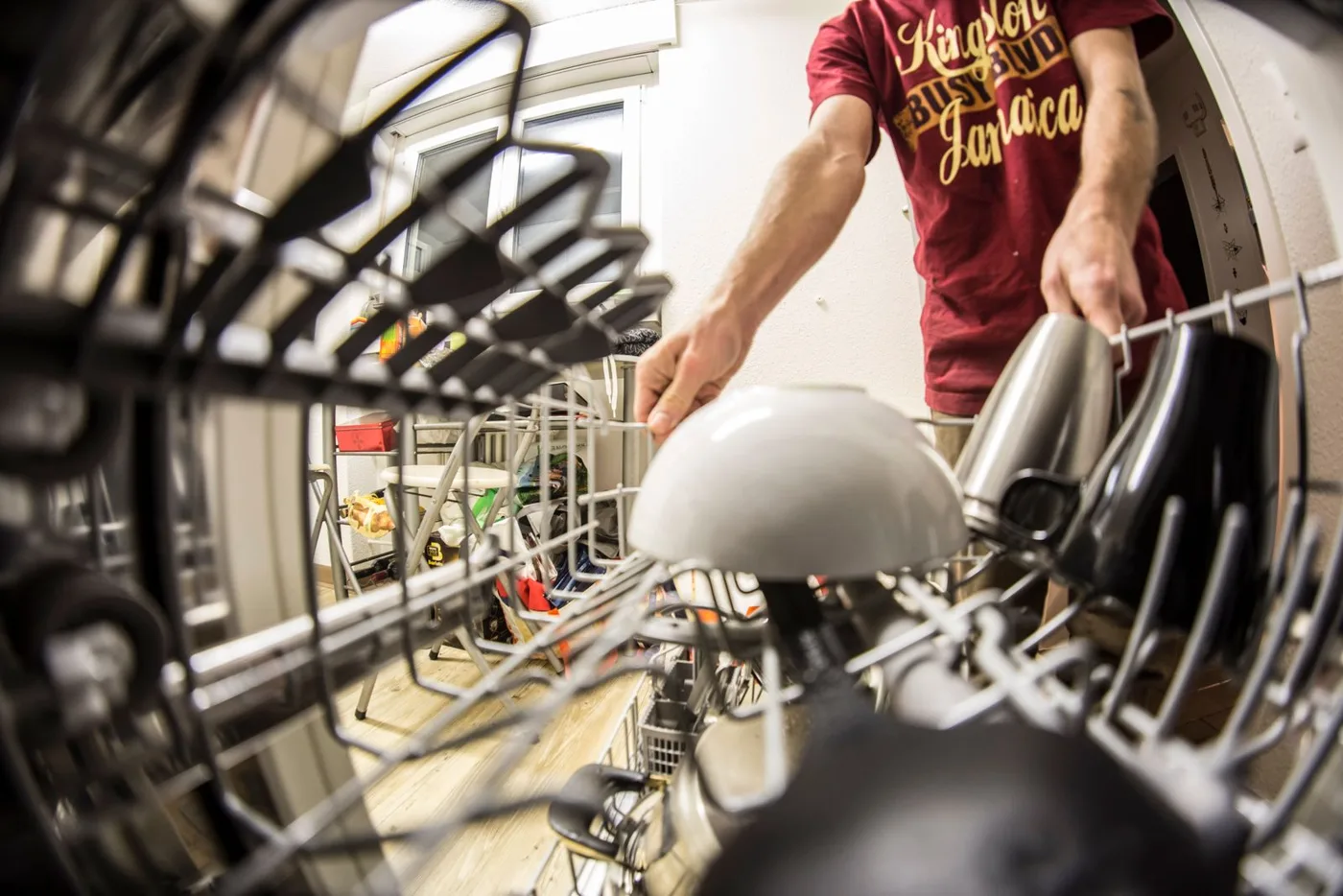
Wait until the appliance is off and cool, then remove the lower rack if the instructions call for it. Photograph the installed filter and the locking marks. Clear visible loose food with care, watching for broken glass rather than reaching blindly into the opening.
Rinse the filter without damaging its screen
Release the part using the documented motion and carry it to the sink over a small tray. Rinse under running water and, when the manufacturer allows it, use a soft brush for attached residue. Whirlpool's filter guidance cautions against rough treatment of the filtration surface.
Work around the whole component, including the upper rim where residue can prevent a clean fit. Do not use a metal tool to enlarge a blocked opening. A torn screen is a replacement issue; forcing it clean can let debris pass where it should not.
Clean only the accessible surrounding area the manual describes. Standing water, persistent drainage trouble or material lodged beyond safe reach warrants further support. Adding drain cleaner is not an appropriate shortcut for a dishwasher problem.
Confirm the lock, not just the position
Return each filter component in the correct order. It may appear seated before its locking mechanism is engaged, so follow the alignment and turn instructions carefully. Do not run the dishwasher with the filter missing or loosely installed.
Put the rack back and check that spray arms can move freely. A tall utensil or a pan handle can create a washing problem unrelated to the filter, making it seem as though cleaning achieved nothing. Compare results after normal loading rather than changing several variables at once.
Choose inspection frequency from the manual and actual use. A household that scrapes plates thoroughly and runs a few loads each week may find different buildup from one cooking several meals daily. Note what was found, not only the date. If food remains on dishes despite a clean filter and suitable loading, record the cycle, detergent and symptoms for the manufacturer or technician.