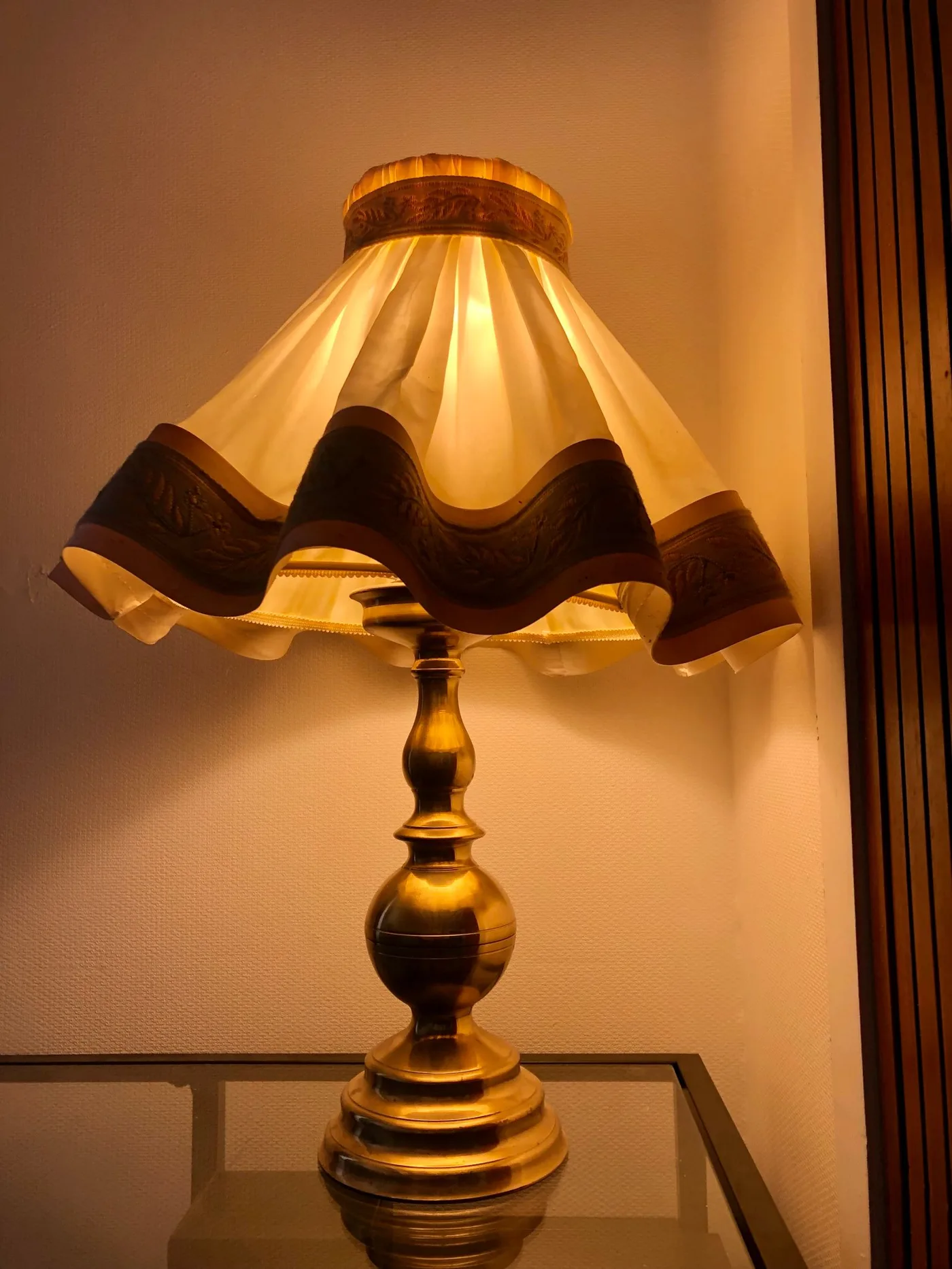
A fabric lampshade can combine cloth, adhesive, lining and a lightweight frame. Those parts do not necessarily tolerate the same amount of moisture. Unless the manufacturer explicitly allows washing, begin with dry dust removal and treat the shade as a constructed object rather than a piece of laundry.
Take the shade off without loading its fabric
Switch the lamp off, unplug it and let the bulb cool. Check how the shade attaches before loosening anything. Support it by the intended frame or fitting, not by squeezing the fabric sides, and place small fasteners in a cup where they will not roll away.
Set the shade on a clean stable surface with enough room to turn it. Look for loose trim, split seams or a brittle lining. If the shade is antique, unusually delicate or already separating, seek specialist advice rather than testing a succession of cleaners.
A pendant shade that cannot be reached safely from the floor is a different access job. Do not balance on furniture to remove it. Arrange suitable help and keep cleaning limited to components that can be handled safely.
Work with the construction
Use the manufacturer's permitted soft brush or gentle vacuum attachment, keeping pressure low. Start with a small area and watch for pulled fibers. A lint roller can catch loose trim or delicate weave, so do not assume it is suitable simply because it works on clothing.
Dust in a consistent direction along the panels or pleats, turning the shade instead of twisting your wrist through awkward angles. Support a flexible panel from behind only if this can be done without stretching or marking it. Keep the tool away from fragile seams.
Do not spray cleaner through the fabric toward the lining or frame. A ring left by a wet spot can be more conspicuous when the lamp is lit. If the maker permits a spot-cleaning process, test discreetly and allow full drying before deciding whether to continue.
Discoloration may be age-related rather than removable dirt. Repeated wet treatment will not reliably reverse yellowed adhesive or a degraded lining. If a shade is scorched, distorted or deteriorated near the bulb, replace it with a compatible part and check the lamp's bulb specifications.
Before reassembly, dust the cool lamp base with its appropriate method and ensure every part is dry. Refit the shade securely without overtightening. Turn the lamp on only after the assembly is complete, then inspect the appearance from a normal viewing position rather than trying to erase every variation in a textured fabric.