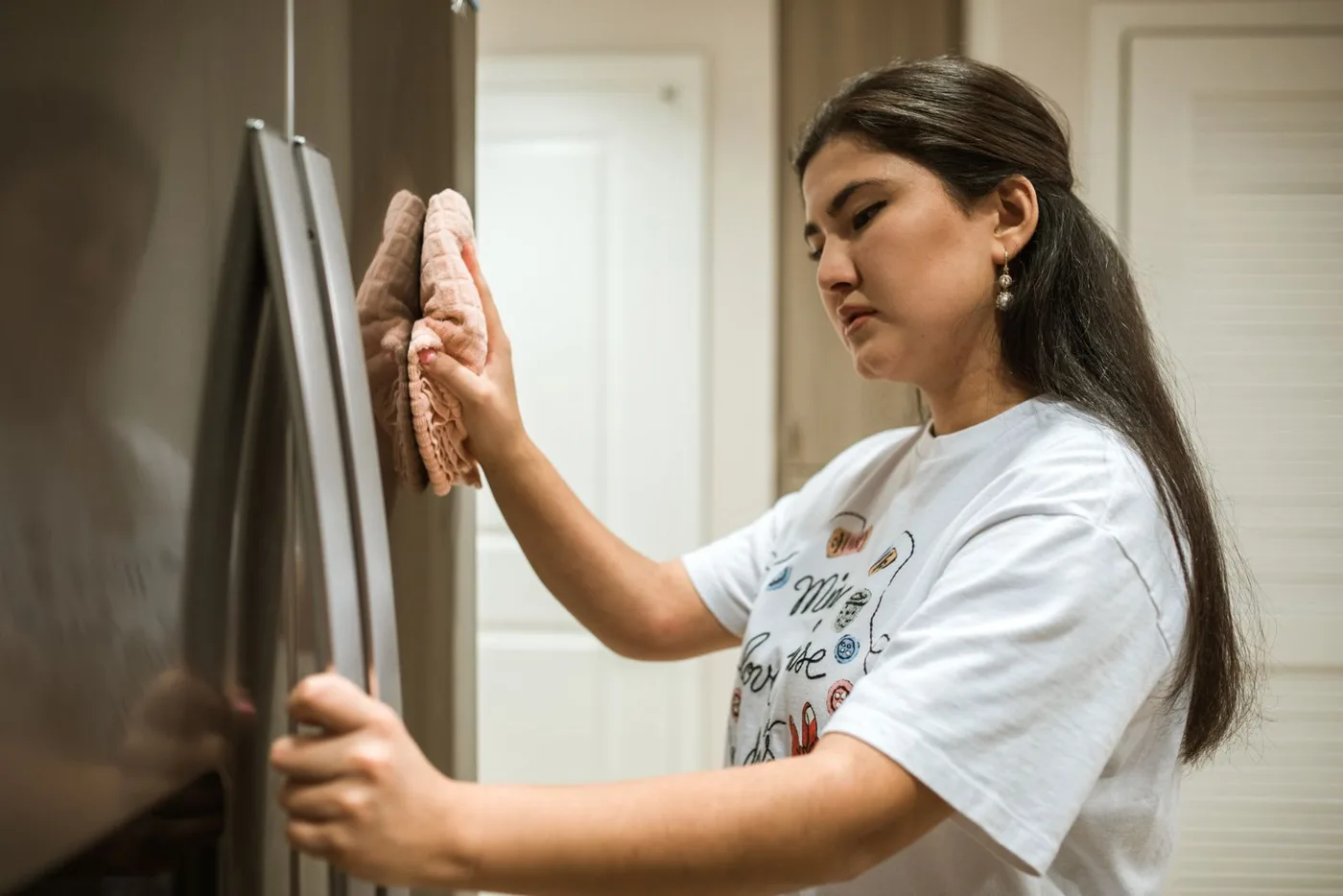
A refrigerator door seal can fail to meet the cabinet because of a crumb, a displaced container or a damaged gasket. Replacing the rubber immediately may miss the simpler obstruction, while repeatedly slamming the door can make the situation worse. Inspect the accessible contact area and the way the door closes before choosing a repair.
Look around the full perimeter
With the door open briefly, check the gasket for food residue, tears and sections that appear out of place. Notice whether a shelf, drawer or tall container prevents normal closure. Take a photograph of an unusual gap before moving everything.
Keep perishable food appropriately cold during any extended work. For a routine inspection, organize the task first and minimize the time the door remains open. Do not remove a magnetic gasket or its retaining parts just to see beneath it.
Clean the contact surfaces gently
Follow the model's cleaning instructions for the gasket and cabinet face. Whirlpool's guidance describes mild detergent, a soft cloth and drying for suitable seals. Avoid transferring advice about waxes, oils or solvents from an unrelated model.
Remove accessible crumbs without stretching the seal or digging into it with a sharp tool. Dry the contact area and close the door normally. A clean surface should not need an extra push from your hip to remain shut.
Do not use heat from a hair dryer to reshape the gasket unless the manufacturer specifically instructs that procedure for the model. A distorted seal, loose hinge or leveling issue may need professional attention rather than household experimentation.
Record what remains after cleaning
If a gap persists, note its location and whether it changes when the door contents are rearranged. Check the manual for any approved simple inspection, but do not rely on a single improvised test to diagnose the entire seal.
Tell support whether the problem began after moving the appliance, changing a shelf arrangement or replacing a part. Include the model number and photographs. Persistent frost, temperature concerns or unusually long running should be described too, without assuming they all have the same cause.
Keep the replacement decision tied to the confirmed part and diagnosis. Similar-looking gaskets can attach differently or fit another door size. A correctly identified repair is preferable to forcing an approximate seal into place.
For routine care, wipe new spills from the gasket when they are noticed and keep food containers clear of the closing path. A brief check after loading groceries can catch a jar that would otherwise hold the door slightly open.