Natural stone counters can show both stains and changes to their surface. Those are different problems: a mark may sit within the material, while an etched patch changes the finish itself. Choosing a stronger cleaner before identifying the stone can make a small area more noticeable.
Identify the stone and its treatment
Check the installation record for the stone type, finish and any sealer or coating. Marble, limestone and granite are not interchangeable cleaning categories, and an engineered surface should follow its own manufacturer's guide. A visual guess from the color or pattern is not enough.
The Natural Stone Institute recommends mild non-acidic care and cautions against acidic cleaners even for stones often considered more resistant. Avoid vinegar, lemon-based mixtures and generic descalers unless the stone supplier specifically approves a product for the complete installation.
Keep routine cleaning simple
Lift loose crumbs with a soft tool before wiping. Use the stone-compatible product at its directed dilution and remove residue as specified. Do not treat the counter with multiple cleaners in a single session because the first leaves a faint haze.
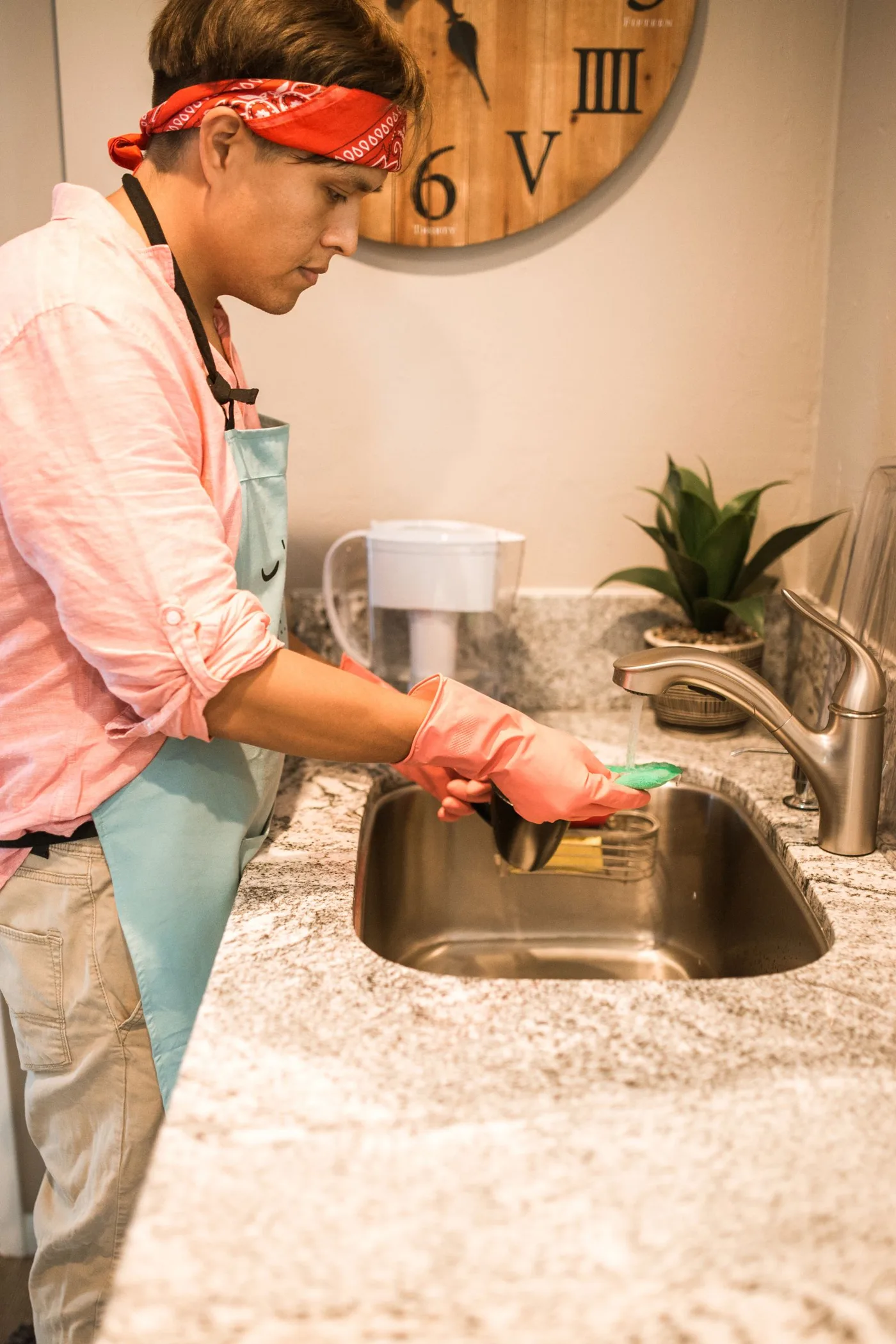
Work around the sink and faucet without allowing liquid to collect against joints. Dry accessible pools and clean the bottoms of soap dispensers before replacing them. A tray may make those items easier to lift, but it should not trap water underneath.
For a fresh spill, blot rather than spread it across a wider area. Use the recommended follow-up method for the stone and the substance. Do not apply an improvised poultice, abrasive powder or solvent simply because it appears in a general household tip.
Use appearance to ask better questions
Photograph a persistent mark in ordinary light and describe what caused it, when it appeared and which products have touched it. Ask the installer whether it resembles staining, etching or another issue. That information helps determine whether cleaning, specialist treatment or refinishing is relevant.
A sealer is not a universal cure for surface damage or a guarantee that nothing can stain. Reapplication depends on the stone and product system, so do not impose a yearly schedule without checking the instructions. Applying sealer over unresolved residue may create another problem.
Keep cutting, hot cookware and wet containers within the protection arrangements recommended by the supplier. The aim is to reduce avoidable wear, not to make the counter unusable. A few suitable boards, trivets and easy-to-lift trays can support normal cooking while making the care routine shorter.
When hiring a cleaner, name the stone in the brief and identify neighboring surfaces. A countertop and its matching-looking backsplash may not be the same material, especially after a renovation.