A small bed is easier to weed when you recognize what is growing and work before unwanted plants become established. The aim is not to disturb every inch of soil each weekend. It is to remove the right plants at the right stage while leaving the roots and crowns of the plants you want intact.
Identify before pulling
Learn the seedlings of the plants you deliberately grow, especially where flowers are allowed to self-seed. Photograph an unfamiliar plant and use a reliable local identification resource before removing it. Do not handle an unknown plant barehanded, and avoid assuming a plant is harmless because it is small.
Distinguish a young annual seedling from a persistent weed with spreading roots. Pulling the visible top may be enough for some seedlings but leave a perennial problem underground. Local extension advice can help identify the plant and an appropriate control approach. Keep suspected invasive plants or seed-bearing weeds out of a home compost system unless local guidance says that disposal is suitable.
Work in a manageable patch
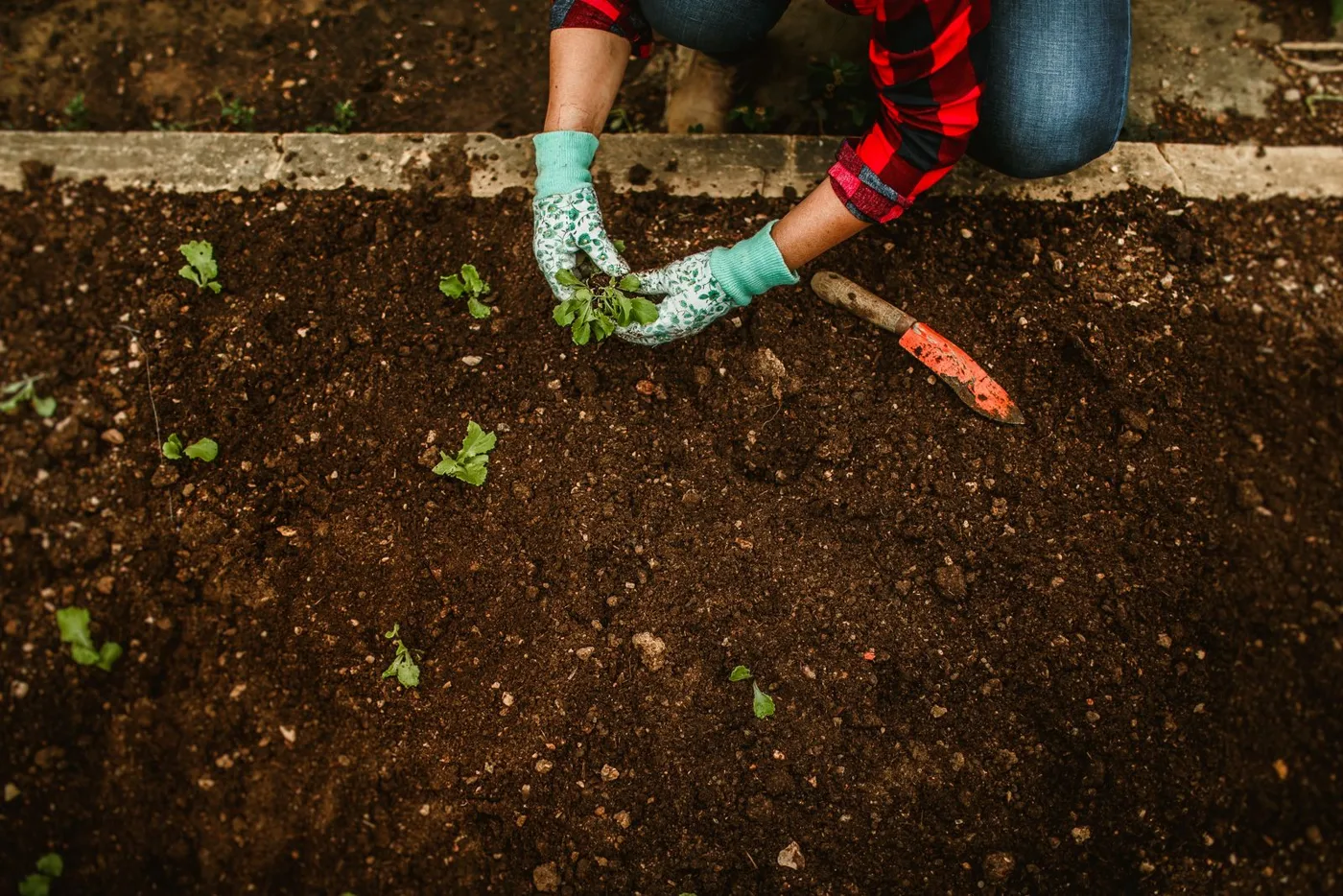
Choose a short section and remove loose debris so you can see the base of each weed. Soil that is workable rather than baked hard or waterlogged is easier to handle without unnecessary disturbance. Use gloves and a small tool suited to the space, keeping clear of irrigation lines and the roots of nearby plants.
Loosen only what is needed and avoid chopping blindly through the bed. Digging deeply everywhere can damage desirable roots and bring more buried seeds toward the surface. If a weed is intertwined with a valued plant, seek a targeted approach rather than yanking the entire clump. Stop before tired hands turn careful work into hurried pulling.
Collect the removed material as you go so roots are not left lying in damp soil. Check the patch for missed seedlings and exposed roots of wanted plants. Restore an appropriate mulch layer without burying stems, and clean soil from tools before moving to another area.
Make the next visit shorter
Walk past the bed regularly and deal with a few visible newcomers before they flower or seed. Keep a simple note of persistent weeds and where they recur. If the same plant returns repeatedly, change the strategy based on identification instead of repeating the same ineffective removal.
Avoid improvised salt or household-cleaner treatments. They can affect soil, neighboring plants and runoff without providing a suitable garden control method. If an herbicide is considered, select a legally permitted product for the identified weed and site and follow its label exactly. A small bed often rewards patient, selective work more than an indiscriminate treatment.