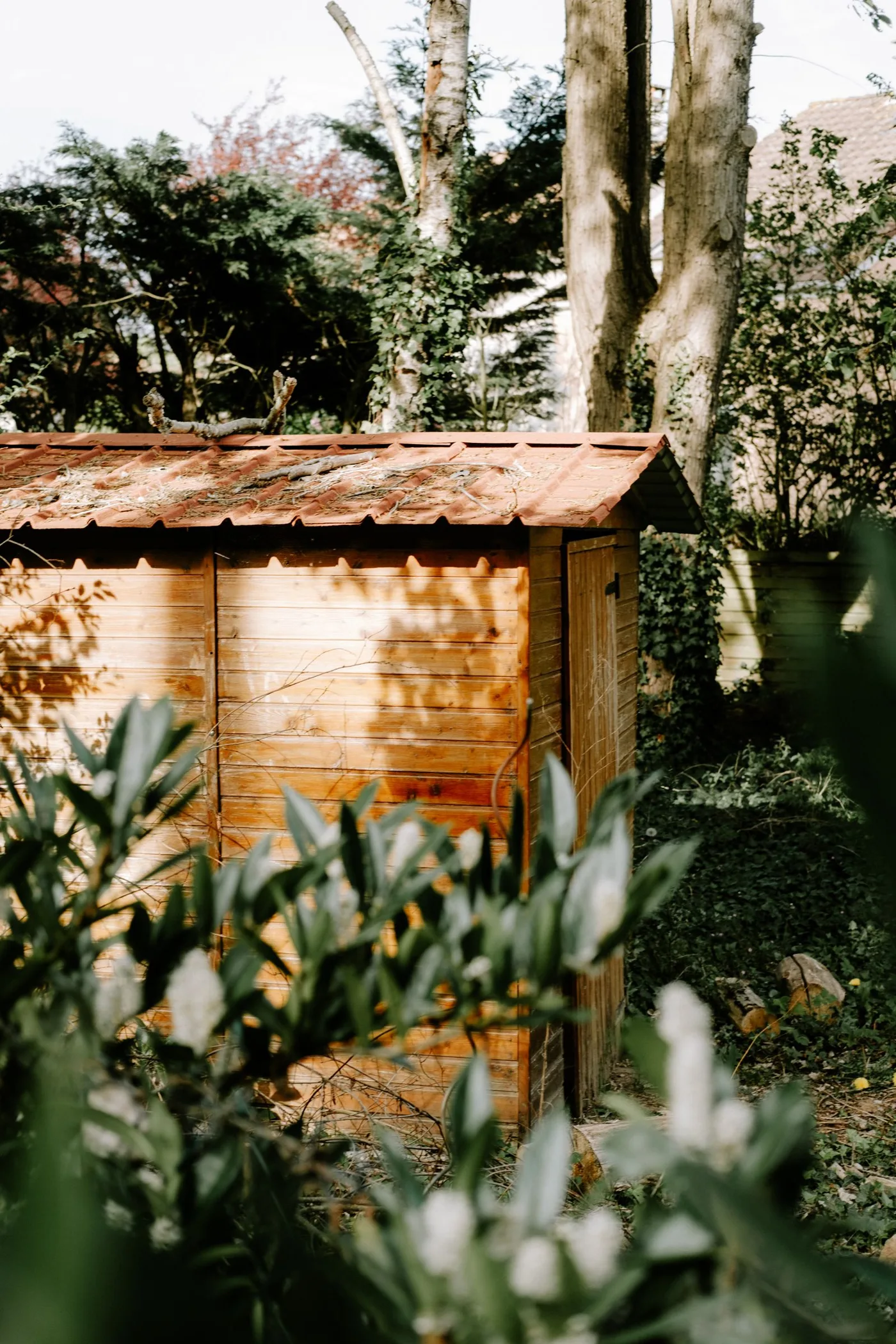
A small shed works better when the things used every week can be reached without unloading the things used twice a year. Organize around frequency, weight and safe storage rather than around a photograph of matching containers. The first objective is a clear entrance and a stable place to stand while choosing a tool.
Make room to see what you own
Choose a dry period and remove manageable groups of items, keeping the doorway clear. Do not empty heavy equipment into a position from which it cannot be returned safely. Separate broken tools, unidentified containers and duplicate items from the useful stock. Dispose of chemicals and other restricted materials through the appropriate local route, not in ordinary yard waste.
Inspect the shed for leaks, unstable flooring, loose shelving or pest activity before refilling it. A tidy arrangement will not protect equipment from water entering above the door. Avoid climbing onto improvised shelving to inspect the roof. Problems involving the structure or electrical supply need qualified attention.
A compact shed can be divided into a daily-use zone by the door, a heavier-equipment zone at floor level and a seasonal zone farther back. The boundaries do not need new furniture. Try the arrangement with existing sound shelving before buying organizers. Leave a clear space where an item can be set down temporarily while you open a door or choose a tool; filling every inch with storage can make the whole shed harder to use.
Give frequent tasks the easiest reach
Place gloves, hand tools and the watering equipment used most often near the entrance at a comfortable height. Keep sharp edges protected and out of children's reach. Long-handled tools need suitable secure supports so a rake cannot fall across the doorway when another handle is removed.
Reserve lower storage for heavy items, provided the floor and shelving are suitable for the load. Lightweight seasonal objects can go higher where they can still be retrieved safely. Do not put a heavy bag above head height merely because it fits. Check the shelf maker's rating and mounting requirements rather than judging capacity by how sturdy it looks.
Keep incompatible storage apart
Store garden chemicals in their original labeled containers as directed, secured from children and pets. Keep them away from food, animal feed and equipment they could contaminate. Fuel, batteries and powered equipment have their own temperature, ventilation and charging requirements. A general-purpose plastic bin is not a universal safe enclosure.
Protect dry supplies from the floor where moisture is a problem, but do not stack them against vents or bury required access points. Use clear labels on permitted secondary storage boxes while leaving original product labels readable. Keep manuals or a list of model numbers somewhere dry, preferably also outside the shed.
Test the arrangement with a real job
Pretend you are going out to weed a bed. Can you collect the tools without shifting a mower, and return them without balancing a pot on one arm? Repeat with a less frequent task such as storing cushions. Rearrange the obstacles that appear during this rehearsal instead of keeping a layout simply because the shelves look balanced.
Leave a small return area for tools that need cleaning or repair, with a clear rule that sharp or hazardous items remain secured. Review the shed when seasons change. If an item has not been used and has no planned purpose, decide whether to keep it rather than letting it occupy the best storage position indefinitely.