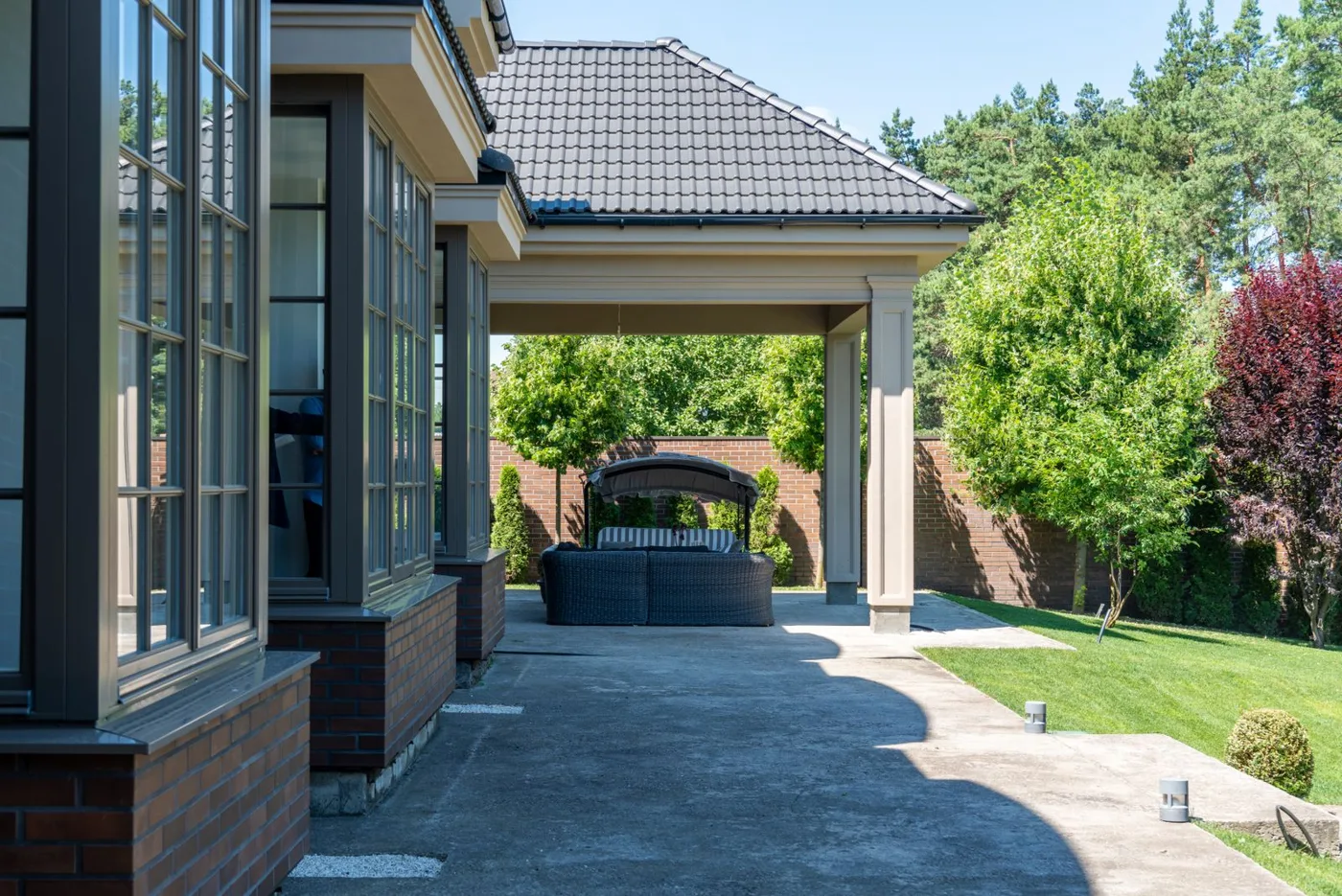
Water needs a route away from a patio without being redirected into the house, a neighbor's property or an unsuitable drain. Routine care can keep existing paths clear, but persistent pooling may indicate a design or settlement problem. Start by observing the water rather than digging a new channel.
Watch from a safe place during rain
Note where water arrives, where it collects and how long the area stays wet after rainfall. Photographs taken from an accessible dry position can show the pattern without requiring you to walk through slippery paving. Include downspouts, planter overflow and the edge where paving meets soil.
Do not assume the lowest visible puddle is the source of the problem. Water may travel from a roof discharge, an uphill bed or a neighboring hard surface. If it reaches the building, record the location and arrange assessment promptly. Water near electrical equipment or an unstable retaining feature requires keeping clear and obtaining qualified help.
Clear only accessible surface debris
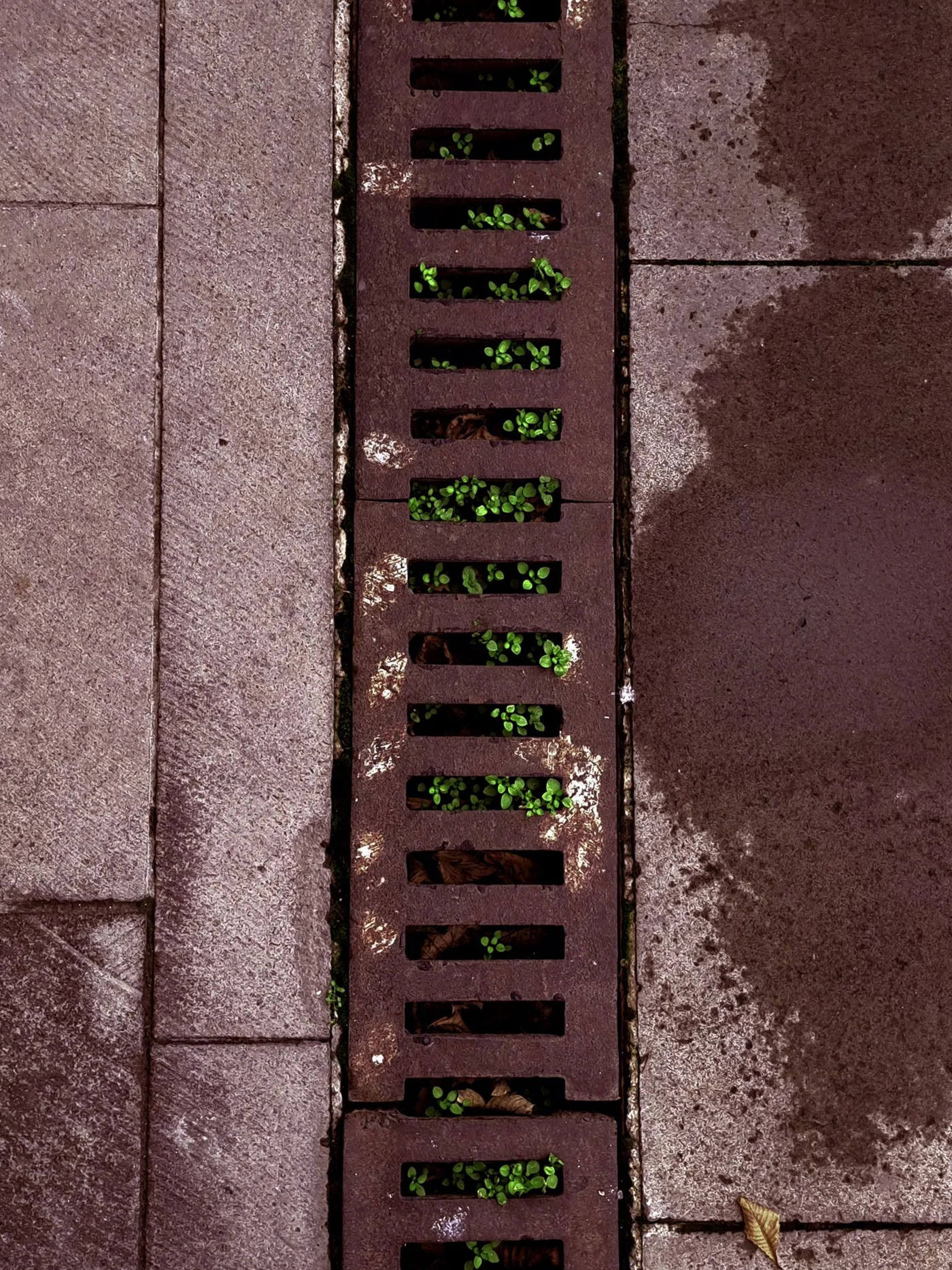
Sweep leaves, loose soil and mulch away from established channels and accessible drain grates. Avoid pushing debris farther into an opening. Keep planters and stored furniture from blocking the route. If a grate is fixed, heavy or unsafe to access, leave it in place and ask the appropriate maintenance provider to inspect it.
Check whether a recent change has altered the route: a new edging strip, a raised bed or a mat laid across a channel. Restore only changes you can safely reverse and are authorized to alter. Do not remove structural edging or cut into paving simply because water appears to be stopped there.
Recognize the limits of a cleanup
If the drain remains slow after surface debris is removed, a blockage or defect may be farther along the system. Avoid pouring improvised chemicals into it. Determine what the drain connects to and ask a drainage professional or property manager about the next step. Some systems must not receive cleaners or particular runoff.
New channels, grading changes and underground drainage need proper design and any required permissions. Digging also requires the appropriate utility-location process. A shallow trench that seems to solve one puddle can send water toward a foundation or across a boundary. The destination matters as much as the collection point.
Keep a record through the next storm
After maintenance, compare the same locations under similar rainfall where possible. A dry afternoon alone does not show that the problem is resolved. Keep notes of cleaning, repairs and recurring pools for anyone asked to assess the site. The useful outcome is predictable drainage, not simply a patio that was briefly free of water after sweeping.