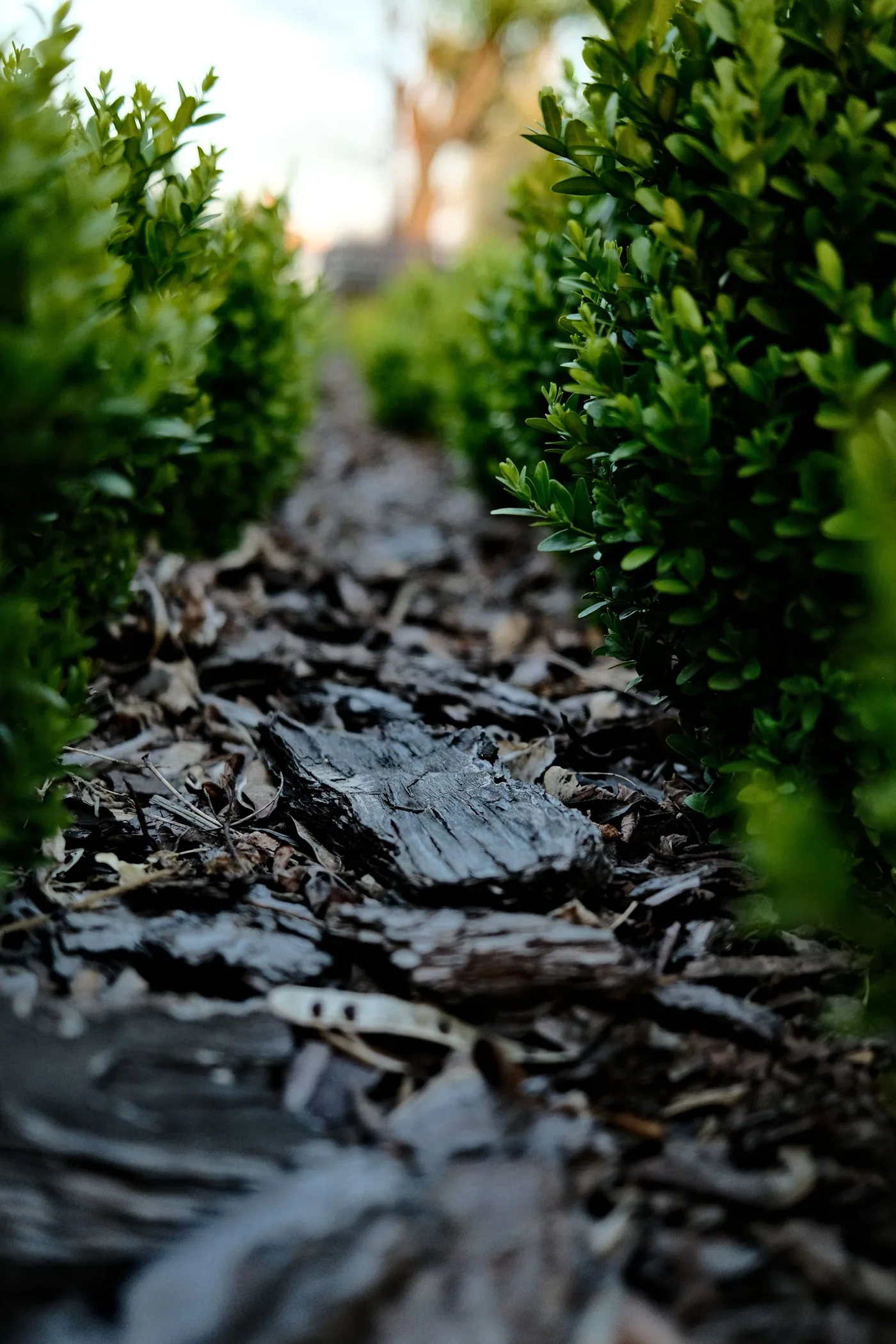
Mulch belongs on the soil surface, but it should not turn a plant's stem or a tree's trunk into the center of a mound. Before adding a fresh layer, look at what is already there. Repeatedly topping up without checking depth can bury crowns and leave planting beds higher each season.
Measure the existing layer
Move a small amount aside to see where mulch ends and soil begins. Decomposed material can look different from the fresh product on top, so check several locations rather than judging from the edge of the bed. Note whether plants were originally set too low or whether soil has washed toward their stems. Mulch cannot correct those planting or drainage problems.
Remove established weeds using an appropriate method before covering the area. Mulch can reduce new weed growth, but it is not a reliable way to bury a mature perennial weed and forget it. Keep the bed's irrigation fittings and drainage routes visible while you work so they are not accidentally covered.
Choose material for the planting
Wood chips, shredded bark, leaves and other materials behave differently as they settle and decompose. Match the product to the plants, site and maintenance plan, using local extension guidance where necessary. Avoid assuming that the same depth suits a vegetable seedbed, a perennial crown and an established tree.
Check what is in a bagged or delivered product and whether it is appropriate for the location. Consider wind, slopes and nearby paving, where loose material may migrate. Do not use mulch to create a dam against a foundation or to conceal a low spot that stays wet. Keep building clearances consistent with the relevant construction and pest-management guidance.
Spread outward, not upward
Distribute the appropriate layer across the root area while maintaining clear space around stems and trunks. University of Minnesota Extension emphasizes keeping mulch away from plant stems rather than piling it against them. For a tree, preserve the visible trunk flare and avoid the familiar volcano shape.
Use your hands or a small tool carefully near plants so roots and stems are not damaged. Pull back material that falls into the crown of a perennial. Where the existing mulch is already at the recommended depth, redistribute it instead of adding more. The fresh color of a new bag is not a reason to increase the total layer.
Revisit after rain and routine care
Check whether rain, pets or watering has moved mulch against stems or across paths. Re-level small accumulations and keep irrigation outlets clear. Before watering, assess the soil underneath; a dry-looking mulch surface does not always mean the root area is dry.
Record the material and approximate application date so the next maintenance decision considers what remains. Replenish based on decomposition and the plant's needs, not on an automatic annual pile. If a plant declines after a bed has been raised or heavily mulched, seek a diagnosis rather than adding fertilizer to an unknown problem.